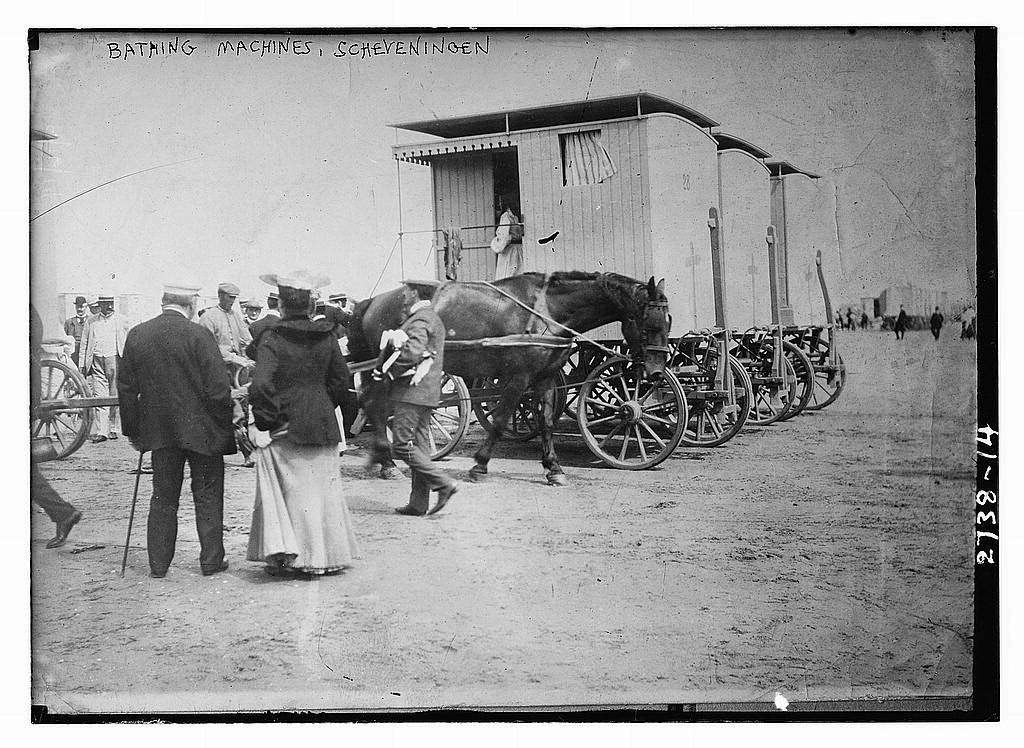
Along a broad beach marked by rows of spoked wheels, a horse waits beside a boxy wooden cabin while onlookers in hats and long skirts gather nearby. The scene is labeled “Bathing Machines, Scheveningen,” placing us at a seaside resort where going for a swim could involve a small procession of people, animals, and carpentry. With their curtained openings and sturdy frames, these rolling changing rooms turned the shoreline into a kind of open-air station for modesty and leisure.
Bathing machines were Victorian-era problem-solvers on wheels: part privacy screen, part transport, and part social ritual. Visitors could step inside to change, then have the hut hauled closer to the water so they could enter the sea away from the crowd’s gaze—a practical response to strict norms about public undress. Details in the photo, from the clustered carriages to the handlers and beachgoers, hint at an organized business built around seaside bathing.
Going Swimming On Wheels explores more than quirky beach contraptions; it traces how technology, etiquette, and tourism reshaped the coast. In this collection of 50+ historic photos of bathing machines, you’ll see how different designs handled wind, sand, and crowds—and how the very idea of a “proper” swim evolved over time. For anyone interested in Victorian inventions, beach history, or the roots of modern seaside culture, these images offer a vivid glimpse into an age when the ocean came with rules, rituals, and wheels.