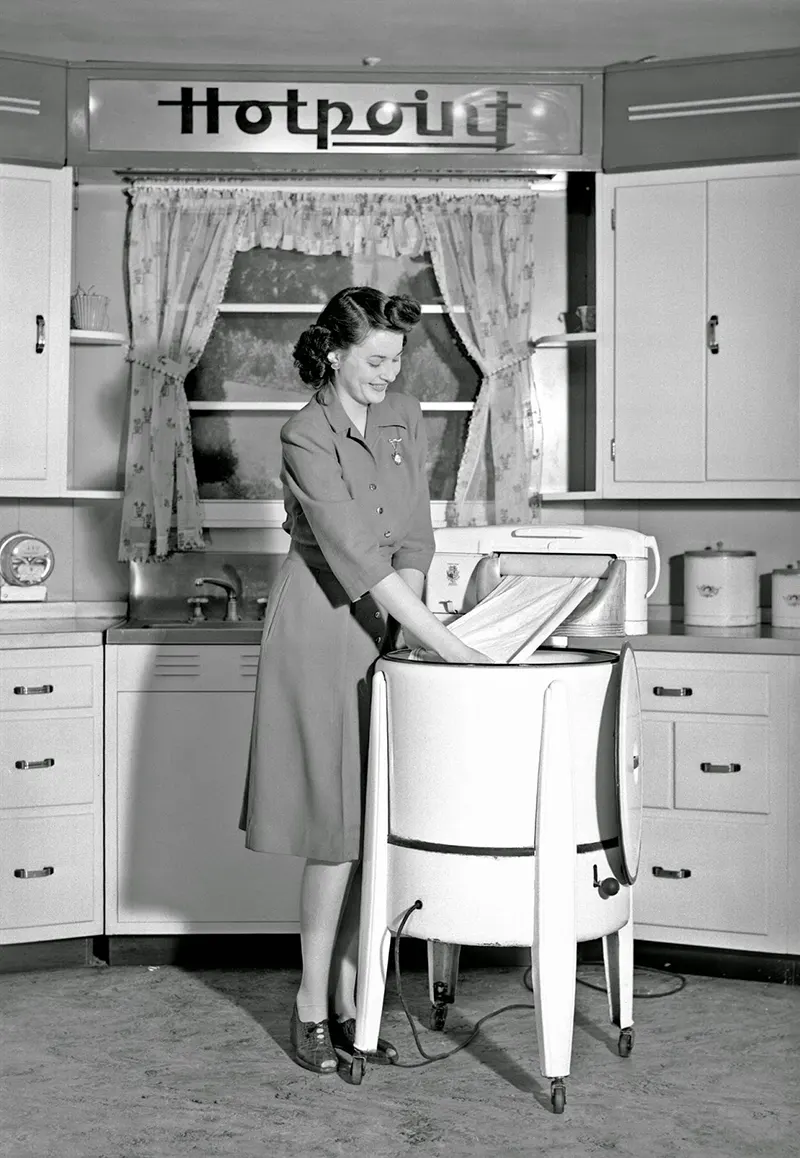
Under a bold “Hotpoint” sign, a neatly dressed demonstrator leans over a wringer-type washing machine, guiding fabric into the tub in a spotless, showroom-style kitchen. Cabinets line both sides, curtains frame the window above the sink, and small countertop canisters hint at the orderly routines these appliances promised to streamline. The scene reads like a carefully staged lesson in modern laundry, where electricity and design were presented as everyday allies.
In 1943, Kentucky Utilities Company demonstrations helped translate new home technology into practical know-how, turning a complicated-looking machine into something approachable. A wringer washer wasn’t just about washing; it represented a shift in labor, time, and safety compared with older methods, with the visible mechanisms inviting both curiosity and caution. The polished surfaces and careful posture speak to the era’s faith in consumer engineering—even as wartime years kept households balancing innovation with constraint.
For anyone interested in inventions, home economics, or the history of electrification, this photograph offers a clear window into mid-20th-century appliance culture. It captures how utility companies and manufacturers marketed convenience through public demonstrations, branding, and domestic aspiration, all within a familiar kitchen setting. Details like the prominent Hotpoint logo and the rolling, upright machine make this an evocative artifact for readers exploring vintage laundry technology and American home life.