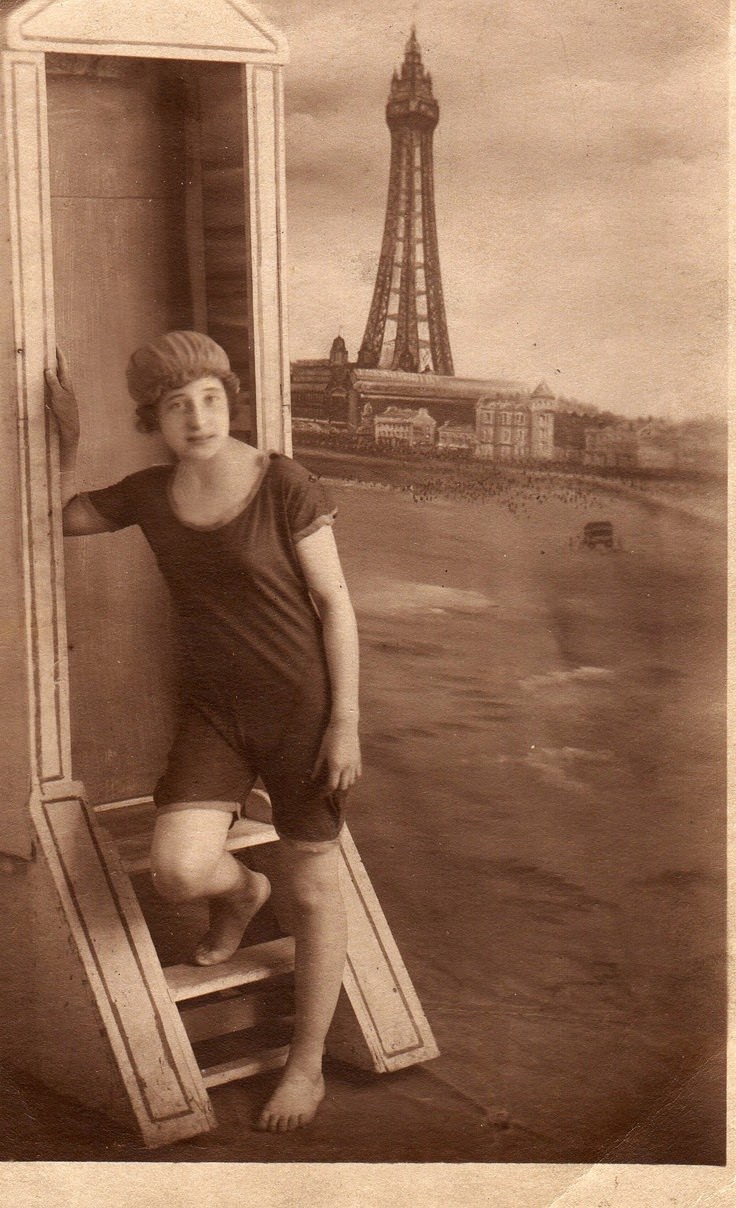
A bather pauses on the little steps of a wooden bathing machine, half in and half out of her private changing hut, as the tide creeps over the sand. The simple structure—part wardrobe, part wagon—was designed to protect modesty while still letting people enjoy the seaside, and the scene carries that peculiar mix of leisure and rules that defined Victorian-era beachgoing. Even the practical details stand out: sturdy panels, a narrow doorway, and a ramp leading straight toward the water.
In the distance, a tall iron tower and a busy shoreline hint at a thriving resort culture, where holidays meant promenades, pier attractions, and crowds spread across the beach. Bathing machines fit neatly into this world of organized recreation, offering a controlled gateway from street clothes to seawater. They were hauled closer to the surf so swimmers could step down and enter the waves away from curious eyes, turning “going for a swim” into a carefully managed ritual.
Going Swimming On Wheels gathers more than 50 historic photos of these remarkable contraptions, tracing how a practical invention became a symbol of an era’s anxieties and amusements. You’ll see changing huts on wheels in different designs and settings, along with the people who used them—bathers, attendants, and day-trippers shaping the look of the early seaside holiday. For anyone interested in social history, Victorian fashion, or the evolution of beach culture, these images make the past feel surprisingly close.