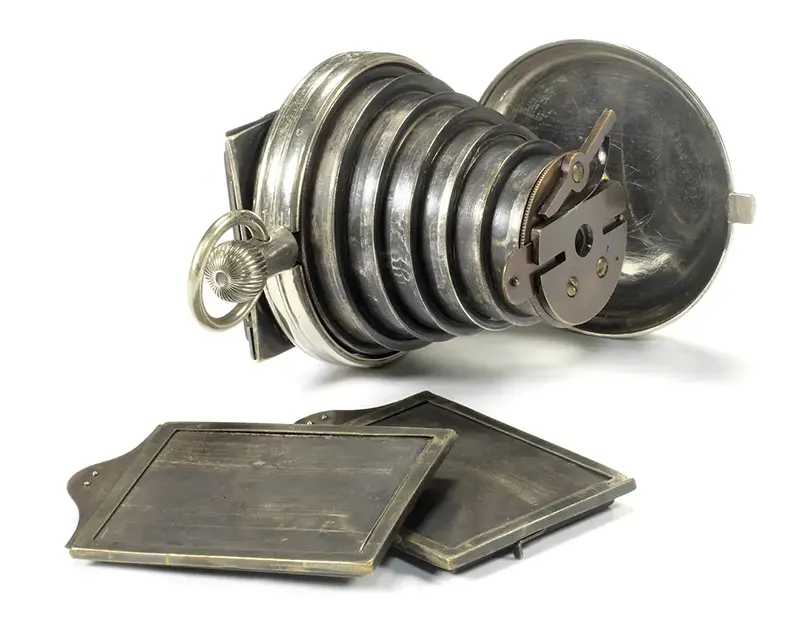
Nestled between pocket-watch engineering and early photographic ambition, the “Improved pattern patent watch camera” looks like a clever illusion until you notice the bellows tucked into its metal body. Its compact form suggests it was meant to travel discreetly, yet every hinge, spring, and latch hints at the careful choreography required to turn a wearable object into a working camera.
In the foreground sit the photographic plates that make this surviving example especially compelling. Before roll film became the everyday standard, plate-based photography demanded precision and patience: plates had to be handled, inserted, and protected from stray light, with results dependent on exposure and chemistry rather than convenience. Seeing the plates beside the device underscores how “portable” photography once involved not just a camera, but a whole method.
Collectors and historians of inventions often point to objects like this as evidence of a restless era—when inventors chased miniaturization and novelty long before modern gadgets made it routine. For anyone researching antique cameras, Victorian innovation, or the evolution from plates to film, this watch camera offers a vivid snapshot of experimentation in mechanical design. It’s a reminder that the history of photography isn’t only told through images, but through the remarkable tools built to capture them.