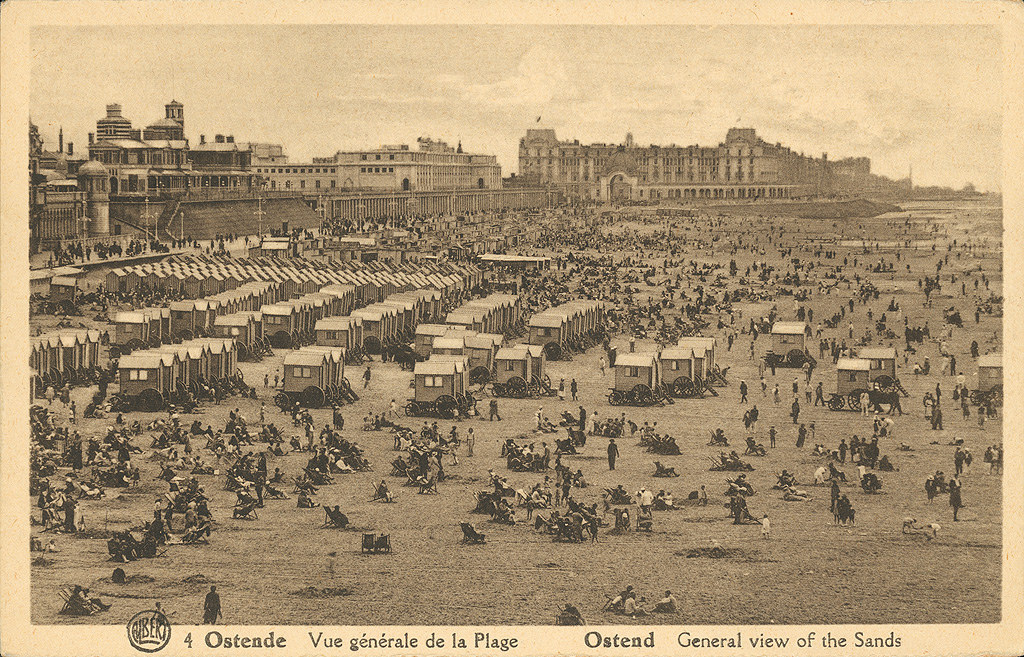
A sweeping view of a packed seaside resort unfolds across the sands, where long ranks of boxy, wheeled bathing machines sit like a temporary village at the water’s edge. Behind them rises a dense line of grand waterfront buildings, while the beach itself teems with day-trippers—some clustered on chairs, others strolling in small groups, and many threading their way between the little cabins. The sheer number of these rolling changing huts hints at how organized, even industrial, a “simple” dip in the sea could be.
Beneath the charm of striped panels and carriage-style wheels lies a very Victorian solution to a social problem: how to enjoy sea bathing while preserving modesty. Bathing machines were designed to let swimmers change out of sight and, in many places, be drawn closer to the surf so bathers could step into the water with minimal exposure. In photographs like this, the machines become more than curiosities—they’re evidence of rules, etiquette, and the evolving relationship between public leisure and private bodies.
Going Swimming On Wheels gathers 50+ historic photos of bathing machines to trace how these inventions shaped beach culture from fashionable ritual to mass recreation. Look closely and you’ll see how design and setting vary: some machines are plain and practical, others more decorative, all reflecting the era’s blend of innovation and restraint. For anyone interested in Victorian technology, seaside history, or the origins of modern beachgoing, these images offer a vivid window into a world where a day at the shore started with a little house on wheels.