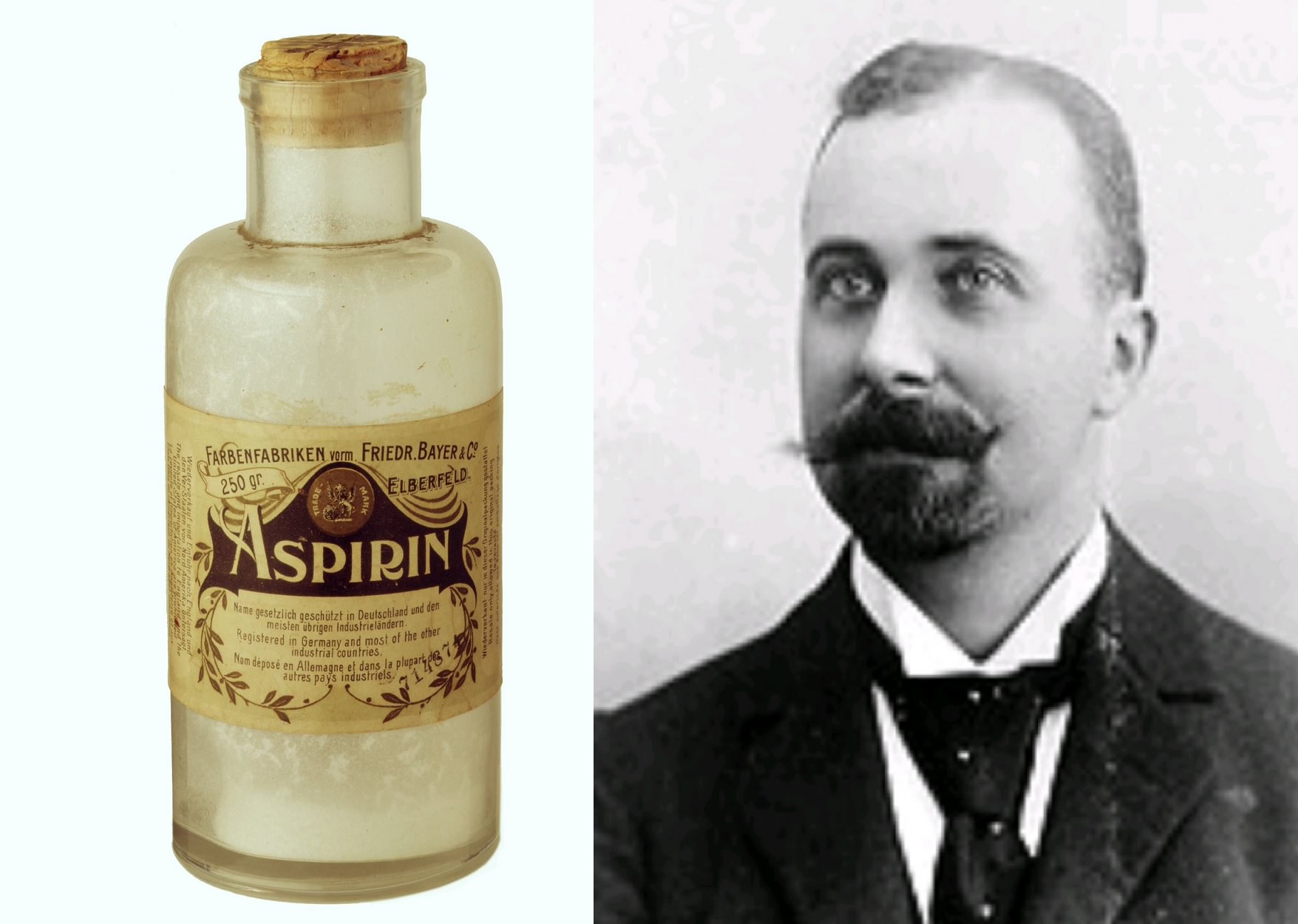
Few inventions have slipped so quietly into everyday life while reshaping modern medicine as profoundly as aspirin. The photograph pairs a period glass bottle—stoppered, labeled, and styled like a late-19th-century apothecary product—with a formal portrait of Felix Hoffmann, the chemist associated in the title with aspirin’s breakthrough in 1897. Together, they evoke the moment when laboratory chemistry began to turn pain relief into something standardized, branded, and widely distributed.
On the bottle’s label, the bold “Aspirin” lettering dominates, framed by ornate flourishes and dense German text that hints at patents, registration, and industrial confidence. The container itself, slightly cloudy and utilitarian, feels like an artifact from the era when pharmaceuticals were transitioning from powders and tinctures to recognizable commercial preparations. For readers interested in the history of inventions, this is a compact lesson in how packaging, typography, and corporate identity helped turn a chemical compound into a household name.
Beside the product stands Hoffmann’s portrait, composed and sharply dressed, a reminder that scientific innovation often arrives through meticulous, incremental work rather than dramatic spectacle. The juxtaposition invites reflection on the wider story of aspirin’s rise: from chemical synthesis and testing to global adoption as a pain reliever and fever reducer. As a WordPress post centered on a pivotal medical invention, this image offers a rich entry point into the history of pharmaceuticals, industrial chemistry, and the everyday objects that carried new science into millions of lives.