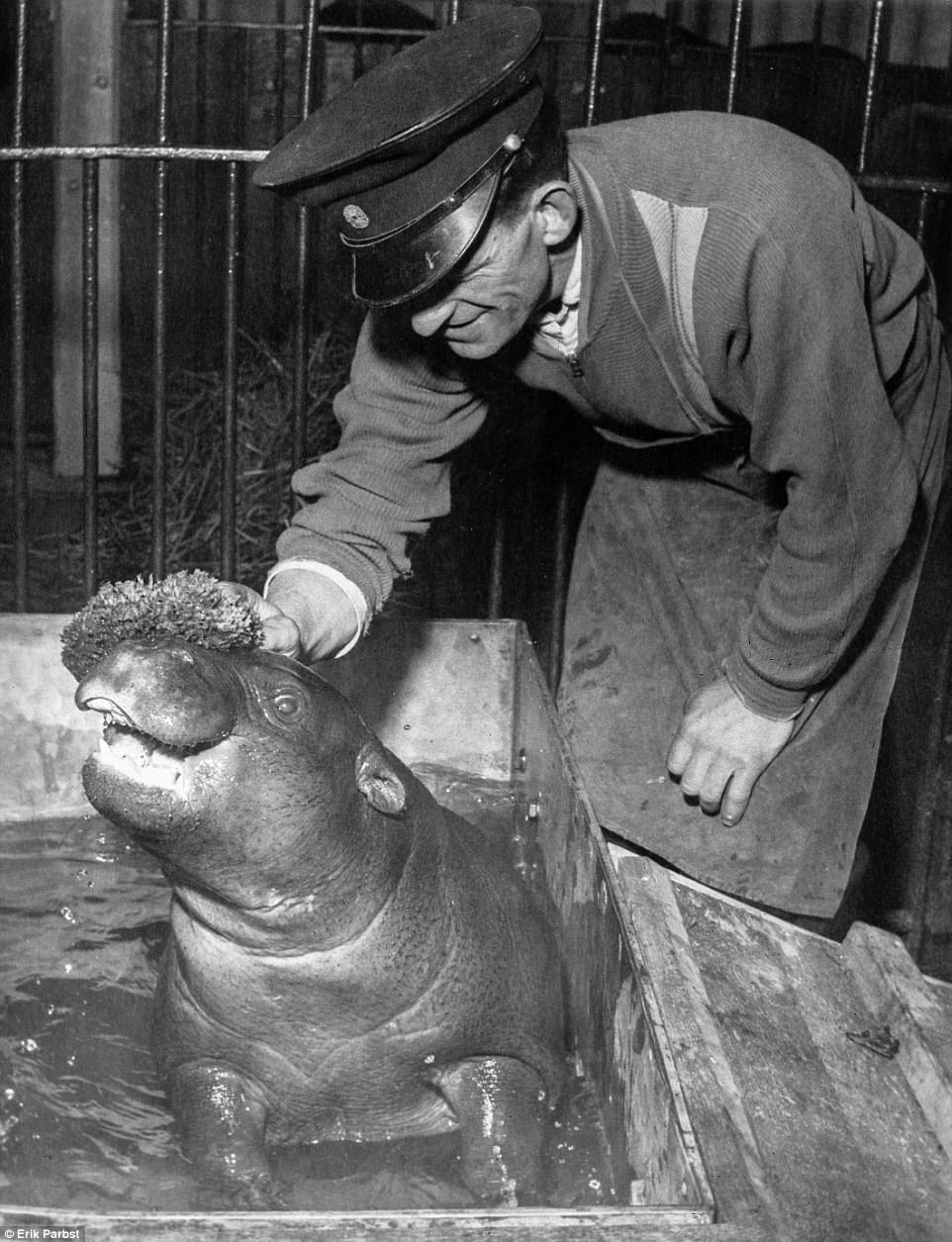
A tiny hippo rises out of a shallow tub like a seasoned bather, head tilted toward the gentle scrub of a caretaker’s hand. The keeper—cap on, work clothes damp at the edges—leans in with practiced care, while the calf’s rounded cheeks and wide mouth make the moment irresistibly comic. Behind them, metal bars and a straw-strewn interior hint at an animal house where the day’s routines were as important as the rare laugh they provoked.
What makes the scene linger is the blend of tenderness and practicality: the bath isn’t staged for cuteness so much as it is a piece of animal husbandry. Hippos depend on water to protect their skin, and in captivity that need often translated into carefully managed pools, tubs, and regular cleaning. The visible brush, the splashing water, and the keeper’s steady posture suggest a hands-on relationship shaped by training, trust, and daily repetition.
For anyone searching for a humorous historical animal photo, this baby hippo taking a bath delivers more than a grin—it offers a glimpse into the working life of early zoo care and the intimate moments that seldom make it into official records. The contrast of slick, shining hide against utilitarian wood and iron underscores how extraordinary animals were folded into ordinary maintenance. It’s a small, funny vignette with a surprisingly rich story: the human routines that kept wild creatures comfortable, and the unexpected charm that emerged along the way.