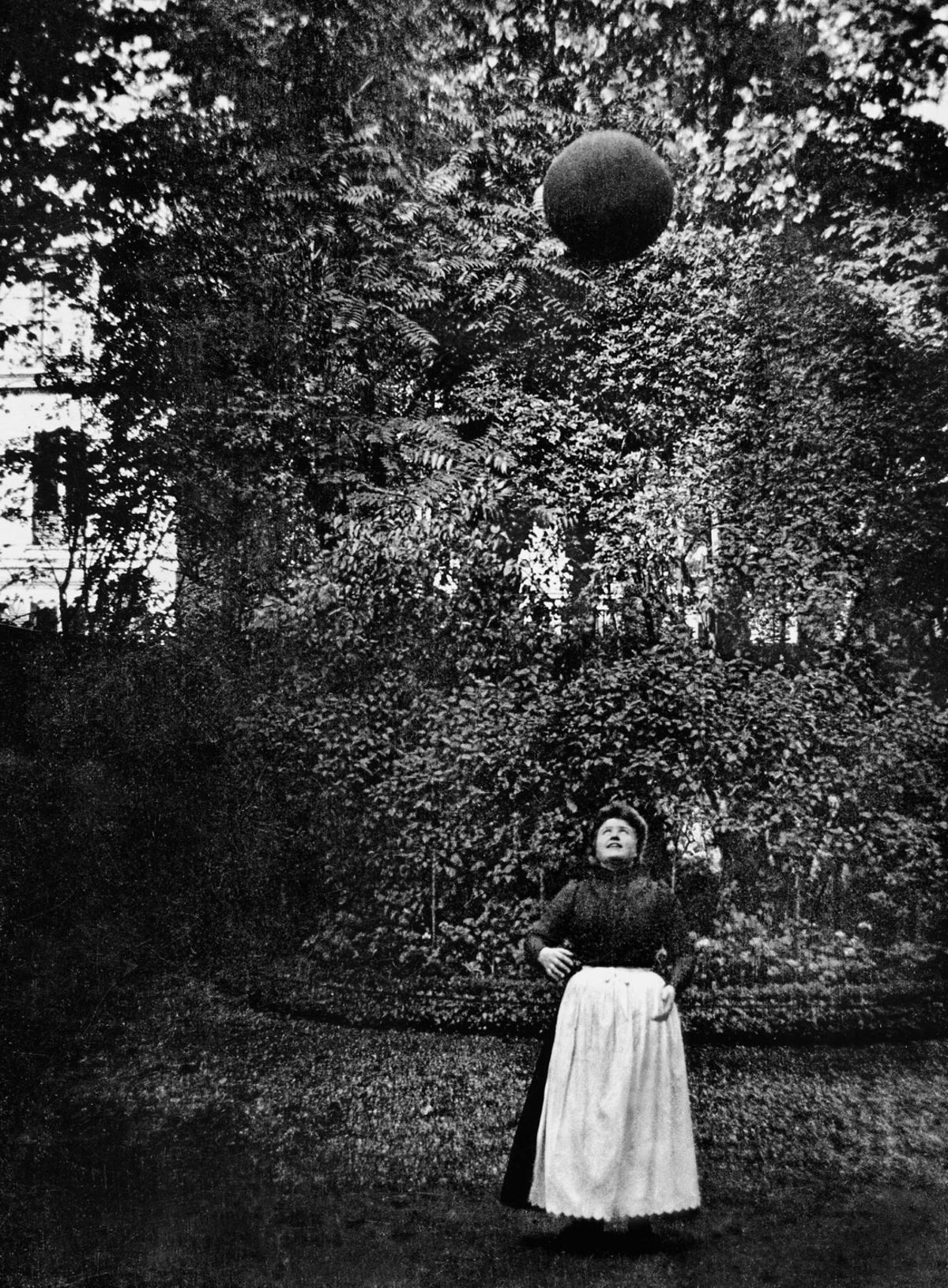
On rue Cortambert in Paris, Dudu—forty years old, as the title tells us—stands in a small pocket of greenery, her gaze lifted toward a dark ball suspended in midair. The scene feels half domestic, half playful: a woman in a long skirt and light apron caught between duty and delight, framed by dense foliage that nearly swallows the street behind it.
Look closely and you can sense the early 1900s world in the details: the heavy fabric, the high collar, the practical silhouette meant for work, and yet the spontaneous posture of someone momentarily absorbed in sport. Whether it’s an impromptu game or a simple toss, the photograph hints at how athletics and leisure could slip into everyday life, even for those employed in the household economy of turn-of-the-century Paris.
For readers interested in historical photos of Paris, women’s lives, and the texture of Edwardian-era streets, this image offers a rare, intimate angle—less monument, more moment. It also invites questions a family archive often raises: who stood behind the camera, what prompted the play, and how a nanny like Dudu navigated the city’s routines while still making space for a brief, buoyant pause on rue Cortambert in 1904.