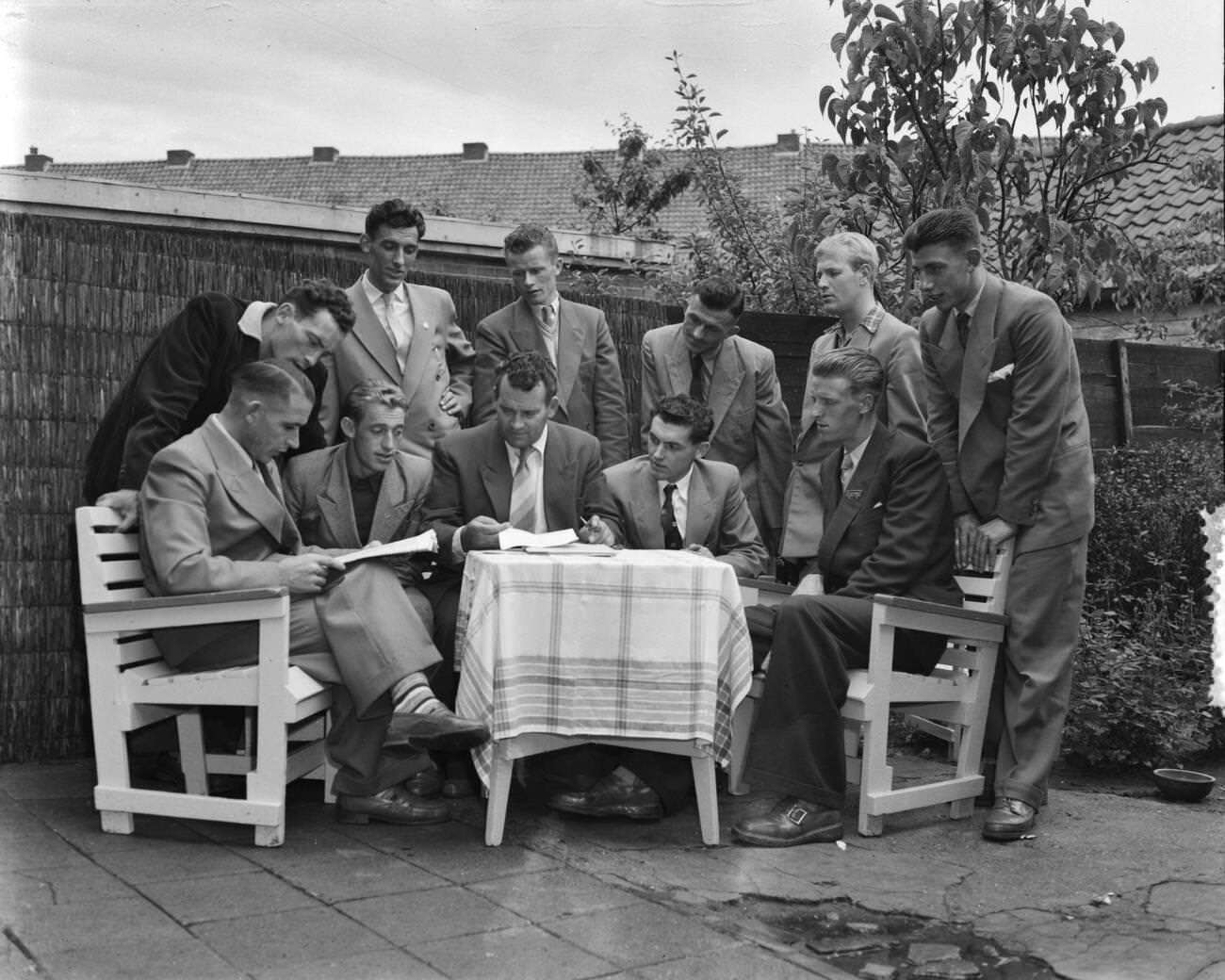
A small patio becomes a strategy room as members of a Dutch Tour de France squad crowd around a table, their attention fixed on papers spread over a checkered cloth. Suits and polished shoes replace racing jerseys, suggesting a moment away from the road where planning mattered as much as power in the legs. The men lean in close, reading, pointing, and listening—an intimate glimpse of how a team organized itself in the 1953 Tour.
Behind them, everyday details frame the scene: a wooden fence, tiled rooftops, and a young tree pushing into the sky, all lending a domestic calm to an event famous for exhaustion and spectacle. It’s the kind of off-stage view cycling history rarely celebrates, yet it hints at the logistics that followed the peloton from town to town—notes, instructions, and the quiet negotiation of roles. Even without the van in view, the title’s “drawing van” evokes the moving hub where decisions, supplies, and communications converged.
For readers interested in Tour de France history, Dutch cycling, and the behind-the-scenes mechanics of mid-century stage racing, this photograph offers a grounded, human counterpoint to finish-line drama. The gathering suggests camaraderie and hierarchy at once, with riders and staff alike absorbed in the work of making a long race manageable. In 1953, success depended not only on daring attacks and mountain strength, but also on these concentrated moments of planning that kept a team functioning day after day.