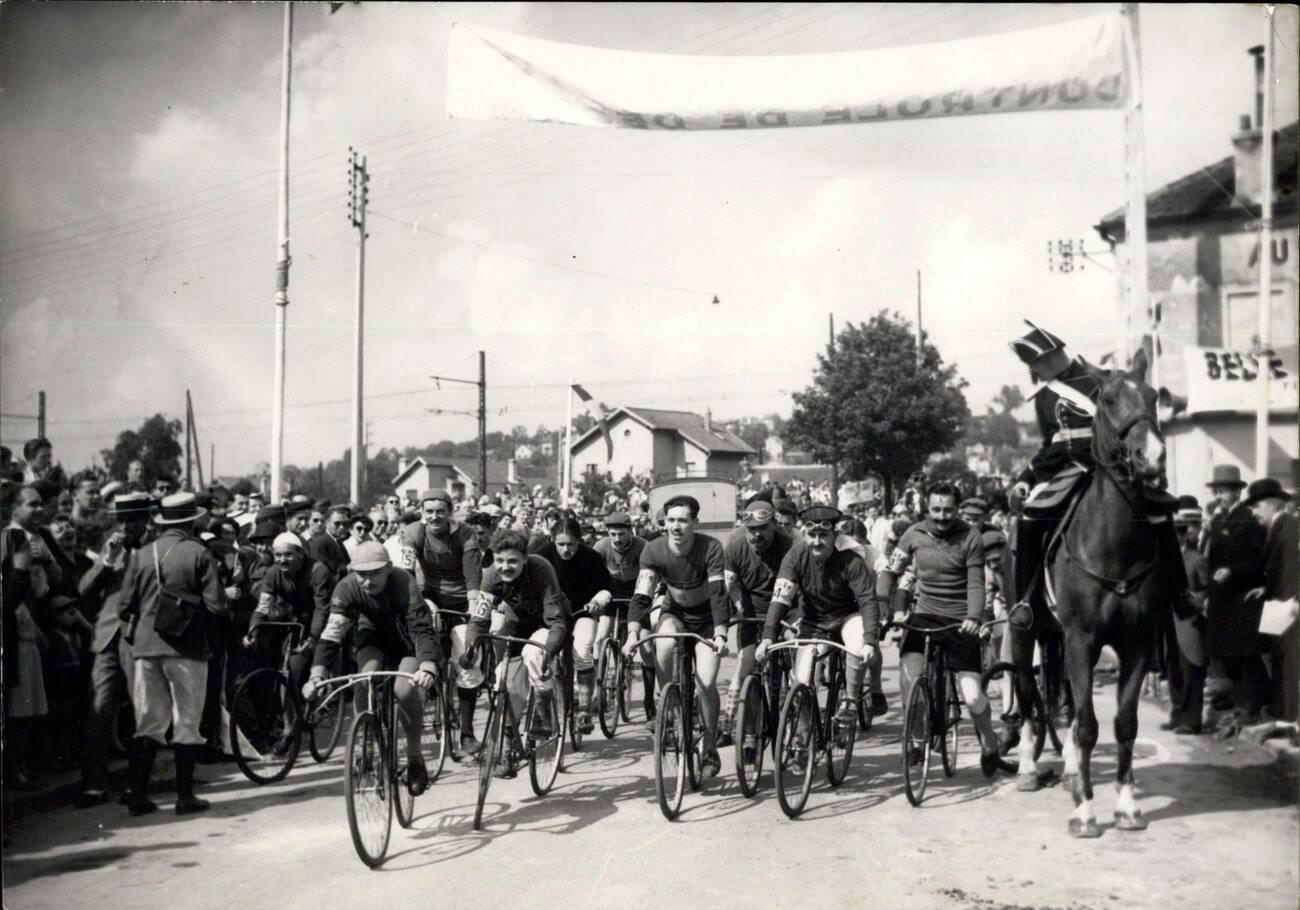
A dense crowd presses in on a narrow roadway as a line of cyclists rolls forward beneath a banner, recreating the legendary opening moments of the first Tour de France for a 1953 reenactment. The riders’ period-style jerseys, caps, and upright racing posture evoke an earlier era of road racing, while the spectators’ hats and coats frame the scene like a living stage set. Even without a visible city name, the mood is unmistakably ceremonial: sport presented as public theater.
At the right edge, an official on horseback commands attention, a reminder that early cycling events often relied on mounted marshals to keep order and clear a path. The bicycles themselves—thin tires, simple frames, and minimal equipment—underline how much endurance and skill mattered when technology offered fewer advantages. Faces in the front row range from stern concentration to quick smiles, suggesting the mix of nerves and pride that comes with stepping into a celebrated past.
As a historical sports photograph, this image is rich in Tour de France history and mid-century cycling culture, bridging commemoration and competition. The reenactment format hints at 1953’s fascination with anniversaries and national sporting memory, using costume and ritual to honor the origins of the world’s most famous stage race. For collectors, historians, and cycling fans alike, it’s a vivid snapshot of how communities kept the Tour’s founding myth alive—one slow-rolling start at a time.