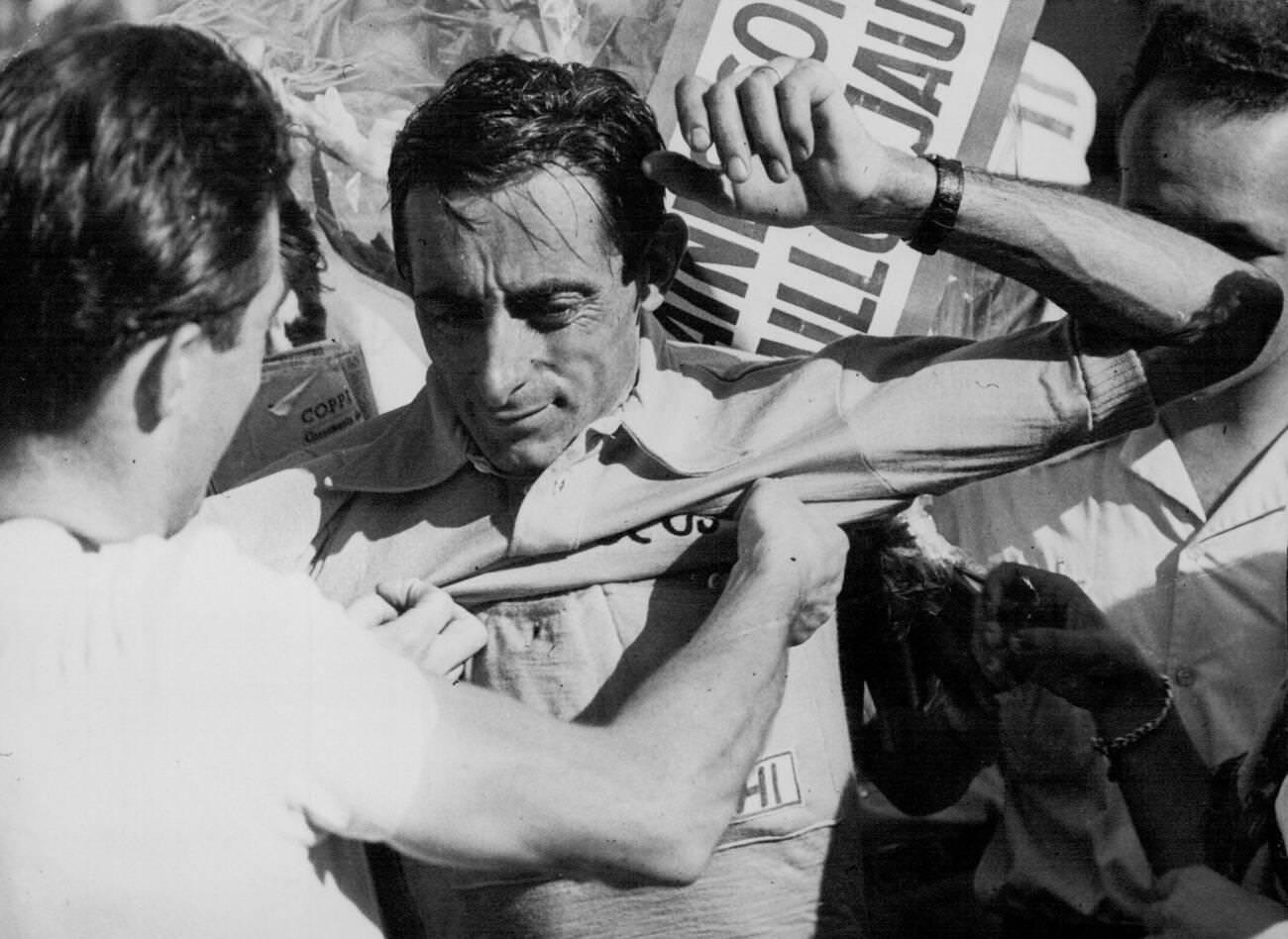
Pressed in close by helpers and onlookers, Fausto Coppi appears at the center of the frame with a tired, focused gaze as hands tug at his jersey and adjust his clothing. The tight crop and jostling arms convey the bustle that surrounds a leader in a Grand Tour, when every second counts and even a brief pause becomes a small spectacle. Behind him, bold lettering on a sign hints at the commercial banners and roadside promotion that were already part of cycling’s traveling theatre.
Rather than celebrating with an exaggerated gesture, Coppi’s expression reads as controlled effort, the kind earned over long stages and hard climbs. Sweat-darkened hair and the creases in his face suggest the physical cost of wearing the Tour de France lead, while the simple kit and lack of modern helmets or radios root the scene firmly in mid-century racing culture. It’s an intimate look at a champion at work, surrounded by the practical, hands-on support that defined team operations in that era.
For fans of classic cycling history, the photo captures the 1953 Tour de France atmosphere in a single crowded moment: pressure, attention, and the quiet resilience of a rider carrying the race on his shoulders. Details like the close quarters, the advertising placard, and the matter-of-fact adjustments to his jersey make it a valuable archival image for anyone researching Fausto Coppi, vintage sports photography, or the evolution of professional road racing. Seen today, it reads like a reminder that the legend was built not only in dramatic finishes, but also in these lived-in seconds between the headlines.