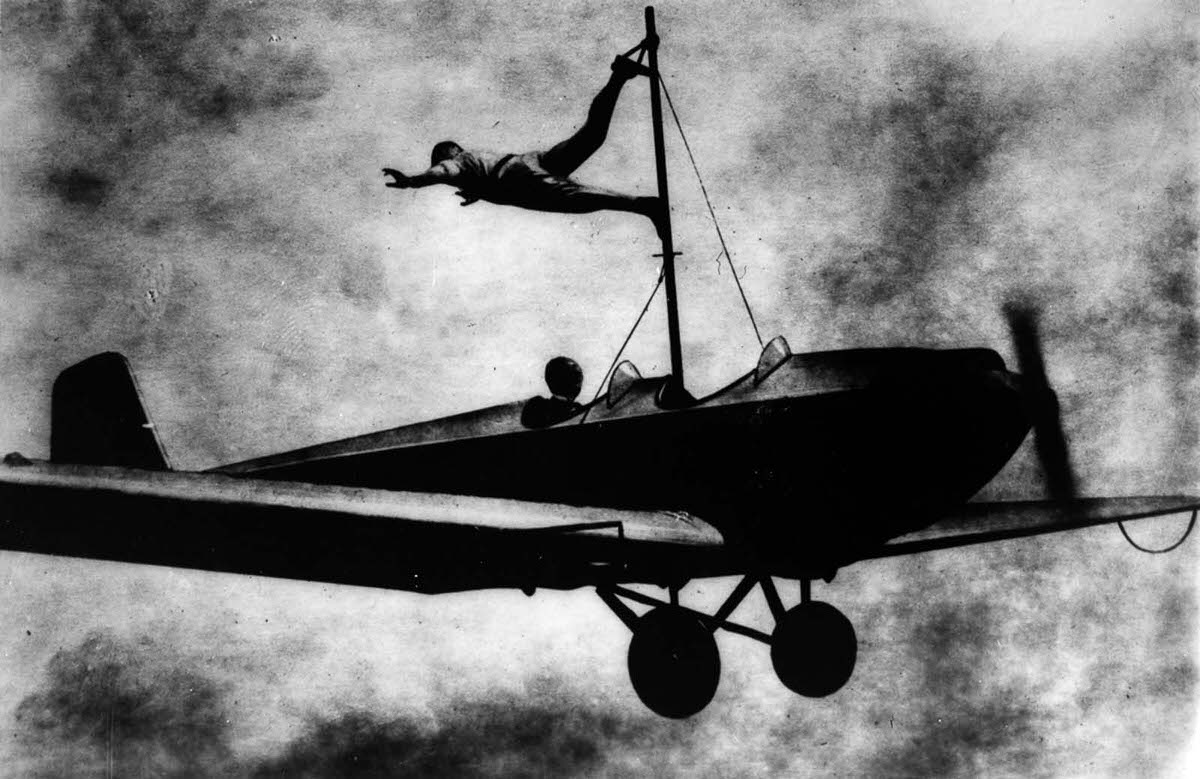
High above the ground, a wing walker stretches out from a narrow mast, body held almost horizontal against the rushing air as the biplane pushes forward. The figure’s pose—arms extended, legs braced—turns the aircraft into a moving stage, while the pilot sits below in the open cockpit, dwarfed by the daring display overhead. Even in stillness, the photo communicates speed, height, and the thin margin for error.
The title identifies the performer as Richard Schindler, practicing a stunt in 1919, when aviation was still young and crowds craved proof that humans could master the sky. Wing walking wasn’t just spectacle; it was a high-risk blend of athleticism, balance, and improvisation, performed without the safety culture that later generations would expect. Photographs like this helped cement the legend of early air shows, where pilots and daredevils sold the future of flight through sheer nerve.
Seen today, the image stands as a vivid artifact of early aviation history and extreme sports before the term existed—part engineering feat, part human drama. The biplane’s simple lines, exposed cockpit, and sparse rigging highlight how close the performer is to the machine, relying on grip and timing rather than modern harnesses or protective gear. For readers searching for wing walking, 1919 stunts, or the daredevil era of airshow entertainment, Schindler’s practice run offers a stark reminder of how thrilling—and precarious—those early flights could be.