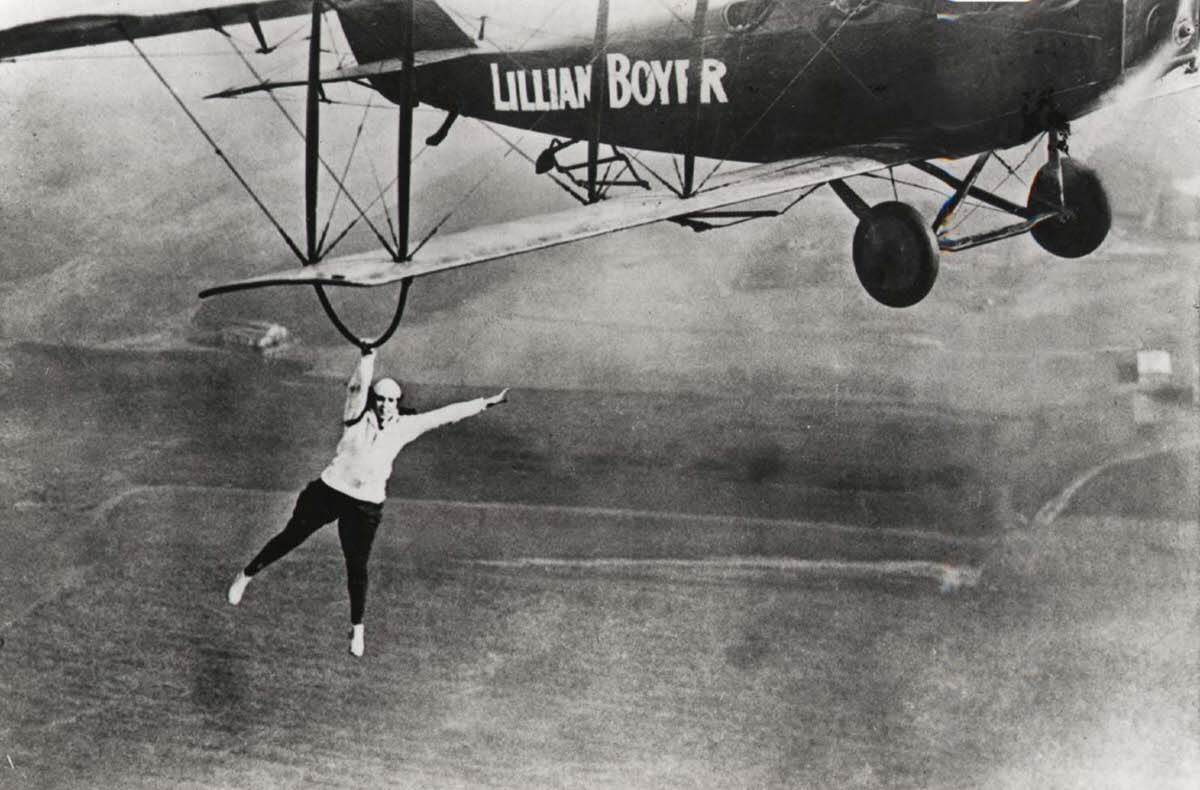
High above the ground, Lillian Boyer hangs one-armed from the wing structure of a biplane, her body stretched into open air as if gravity were only a suggestion. The aircraft’s rigging and struts form a stark lattice against the sky, while the bold lettering “LILLIAN BOYER” on the fuselage turns the machine itself into a billboard for bravado. Even at a glance, the scene radiates the raw, improvised thrill that defined early aviation spectacle.
Wing walking in the early 1920s wasn’t just a stunt; it was a moving performance staged on a fragile-looking craft of fabric, wire, and wood. Boyer’s streamlined outfit and goggles hint at both speed and exposure, and the simplicity of her grip underscores how much these acts depended on strength, timing, and nerve rather than modern safety systems. The camera freezes a moment that would have unfolded in wind and engine roar, when a single slip could turn entertainment into catastrophe.
Photographs like this one helped build the mythology of air shows and barnstorming, where pilots and daredevils sold wonder as much as tickets. For readers searching the history of women in aviation, early aerobatics, or 1922 wing walking, Boyer’s midair pose is a powerful reminder of who claimed space in the sky—and how they did it. The image remains unforgettable because it balances showmanship with risk, capturing an era when flight still felt like a frontier you could touch, or in this case, cling to.