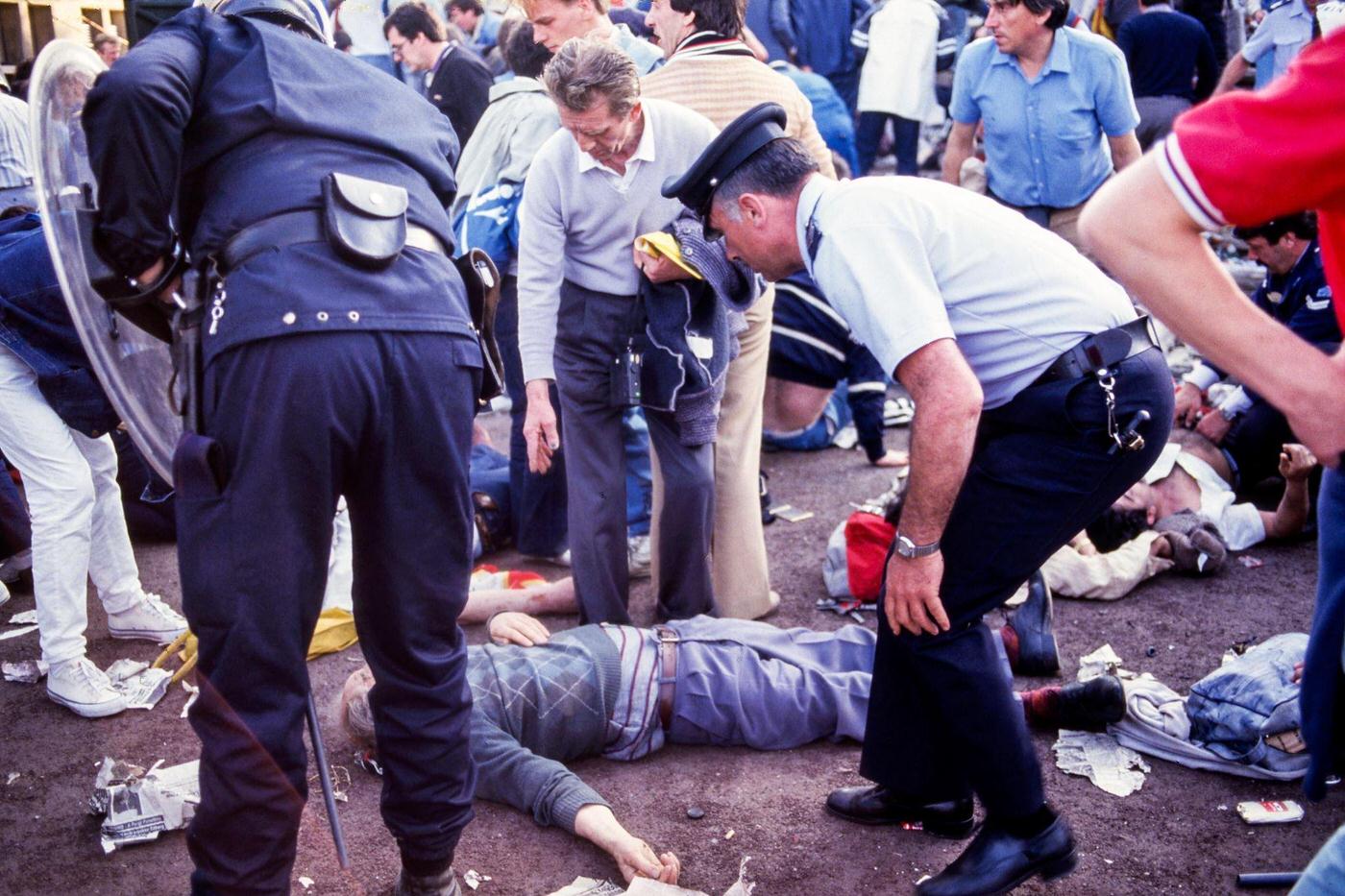
Chaos hangs over the ground outside Heysel Stadium in 1985, where the European Cup Final was meant to be a celebration and instead became a scene of panic and devastation. Police officers and bystanders cluster tightly, some bending down to check on the fallen while others scan the crowd, their faces marked by shock. Debris—paper, bottles, and abandoned clothing—litters the pavement, underscoring how quickly order dissolved into tragedy.
In the foreground, motion and stillness collide: uniformed figures move with urgency while multiple bodies lie sprawled where they fell, surrounded by onlookers who appear unsure whether to help, retreat, or simply bear witness. The closeness of the crowd hints at crushing pressure and confusion, a reminder that stadium disasters often unfold in seconds but leave consequences that last for generations. Even without seeing the pitch, the photo speaks to the darker side of football culture when fear, aggression, and inadequate control converge.
Remembered today as the Heysel Stadium disaster, the 1985 riots and resulting fatalities forced European football to confront safety, policing, and the responsibilities of clubs and organizers. Images like this one remain essential historical evidence, cutting through sanitized retellings with the blunt reality of lives interrupted on a match night. For readers searching the Heysel Stadium riots, European Cup Final 1985, or the tragedy that changed football forever, this photograph stands as a stark memorial and a warning.