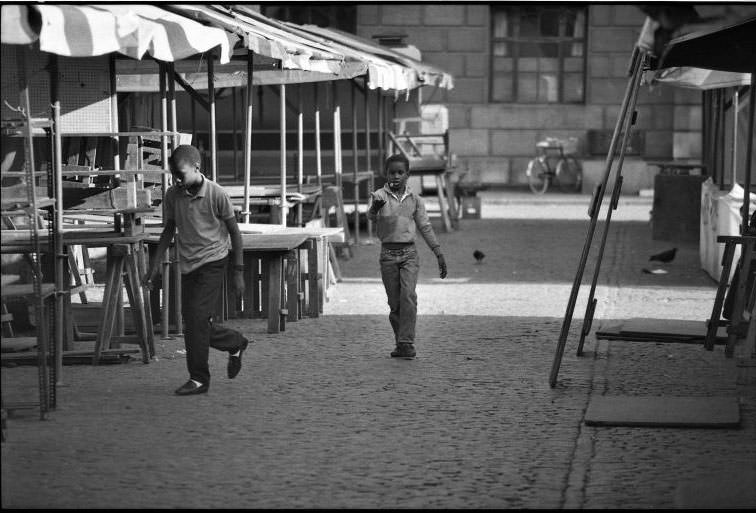
Morning quiet hangs over Market Square, where striped awnings and folded tables suggest a place that usually hums with trade. The cobbled ground is clear of crowds, leaving the geometry of stalls, rails, and stacked frames to stand out in crisp lines. Against that orderly backdrop, two boys move through the open lane, their small figures turning an empty marketplace into a lived-in street.
What’s striking is how much the scene says about everyday commerce without a single vendor at work: the portable counters, the repetitive scaffolding, the canopy fabric built for quick shelter and quicker packing away. The title “Inventions” feels apt here, not as grand machinery but as practical ingenuity—temporary architecture designed to appear at dawn and vanish by evening. Even the wide gap between stall rows reads like an intentional design, a corridor made for foot traffic, carts, and the steady circulation of goods.
Beyond the frame, you can almost imagine the smells of produce and the clatter of setup returning, yet this photograph lingers on the in-between moment when the square belongs to passersby. A background façade and a few scattered shapes on the ground hint at a larger town center, solid and permanent compared with the market’s movable parts. For readers interested in urban history, street photography, and the texture of old marketplaces, this view of Market Square offers a simple, compelling reminder that public life is built as much from routines and improvisations as from monuments.