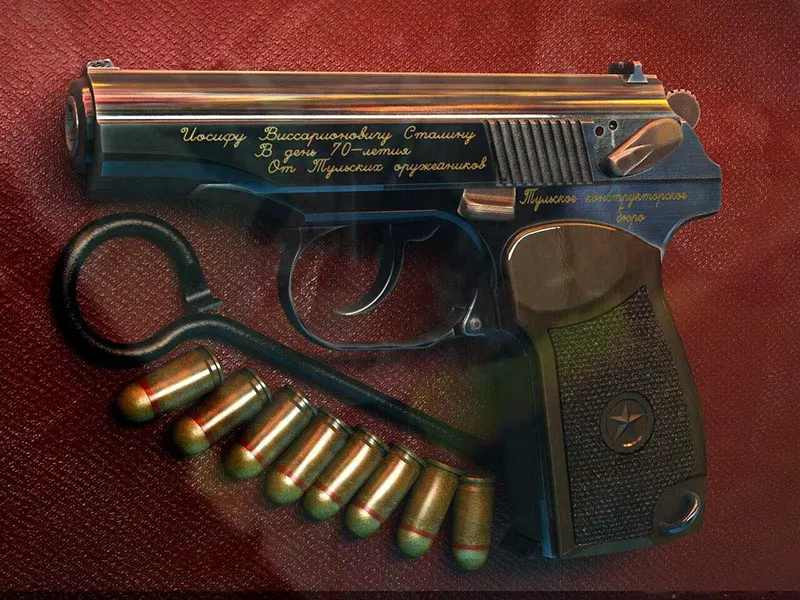
Across a textured red surface rests a compact Makarov-style pistol, its blued metal catching the light along the slide and trigger guard. A short cord loops beside it, and a neat row of cartridges underscores the object’s purpose as a working sidearm rather than a mere decorative token. The composition feels deliberate, drawing the eye from the ammunition to the weapon’s clean lines and practical proportions.
Most striking is the gold Cyrillic inscription engraved along the slide, a formal dedication that aligns with the post title describing a birthday gift to Josef Stalin (1949). Such personalized presentation pieces sat at the intersection of engineering pride and political ritual, turning an “invention” into a message about loyalty, prestige, and state power. Even without additional context on who presented it, the careful lettering and polished finish suggest an item prepared for ceremonial attention.
As a historical artifact, an engraved Makarov pistol invites readers to consider how technology, symbolism, and authority could be fused into a single object in the Soviet era. The firearm’s utilitarian design contrasts with the elegance of the dedication, reminding us that craftsmanship and coercion often traveled together in 20th‑century political culture. For collectors and historians searching terms like “Makarov pistol,” “engraved Soviet firearm,” or “Stalin birthday gift,” this image offers a vivid doorway into the material language of power.