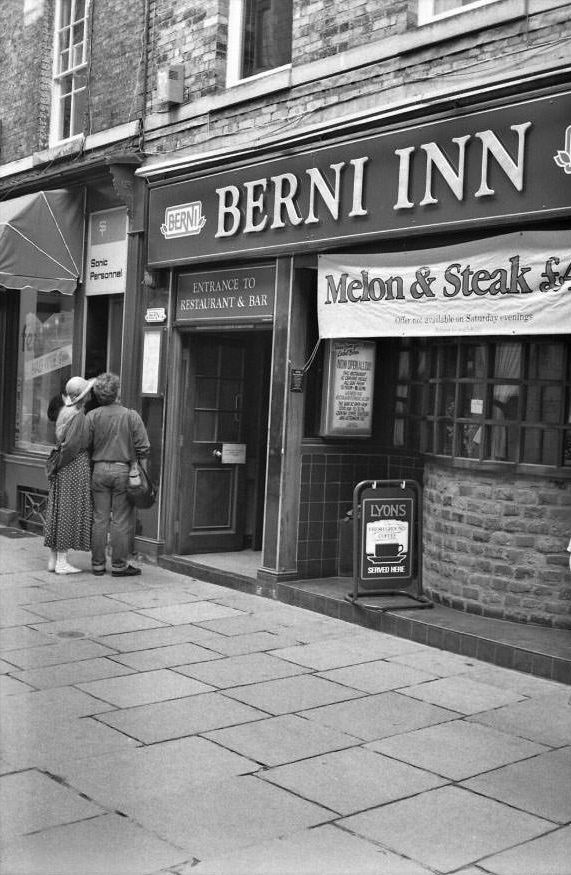
Along Rose Crescent, a bold shopfront sign for “BERNI INN” stretches across the brick façade, promising the familiar comforts of a restaurant and bar just inside. The street-level details do the real storytelling: tall windows above, tiled cladding at the entrance, and a neat line of paving slabs leading past a small A-board advert for Lyons. A couple pauses beneath an open umbrella outside, their stance suggesting indecision—or anticipation—before stepping in from the bustle.
Marketing language from the era adds texture to the scene, with a large “Melon & Steak” banner hinting at set-menu dining and the mid-century appetite for simple, hearty fare. The doorway reads “Entrance to Restaurant & Bar,” making the building feel like a well-known stop on a busy pedestrian route rather than a destination reached by car. For anyone researching Rose Crescent history, high-street dining culture, or the evolution of British hospitality signage, the layered typography and storefront design are as revealing as the people passing by.
Even without a captioned date, the photograph carries the atmosphere of a time when chain eateries, printed specials, and sidewalk boards competed for attention in compact city streets. Rose Crescent comes across as both practical and convivial—a place where an evening meal could be decided on the spot, guided by a window display and a boldly lettered fascia. In the spirit of “Inventions,” the scene also nods to the invented art of selling dinner: branding, menus, and street-facing persuasion working together to turn a corner of town into an invitation.