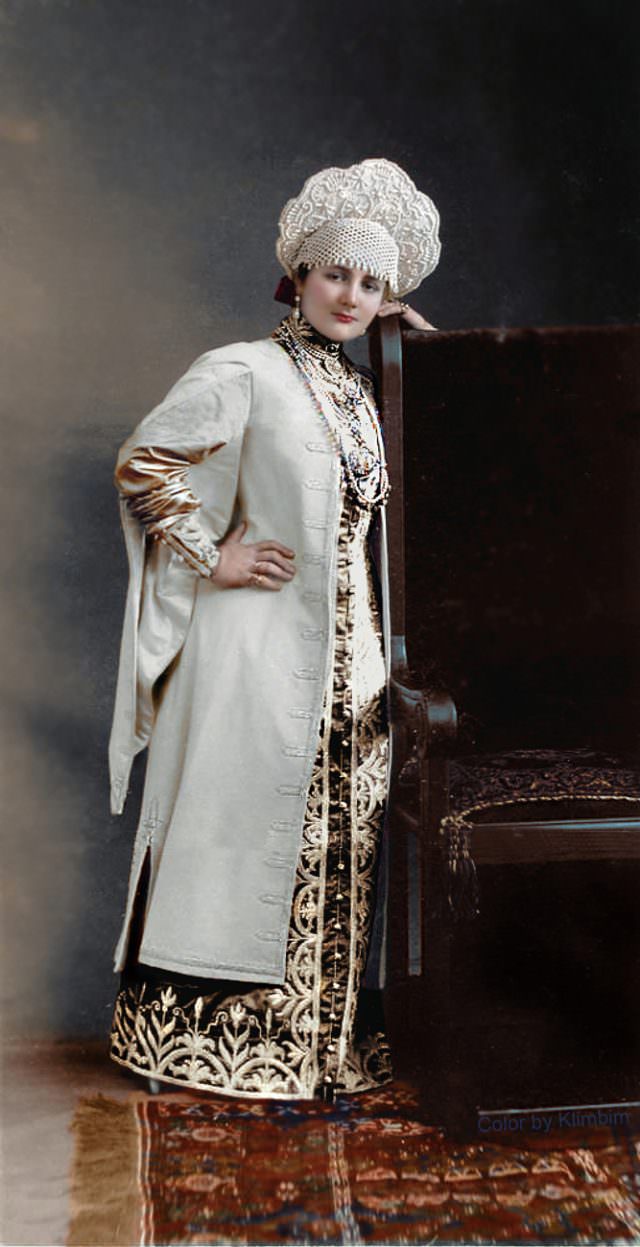
Elegance in 1903 takes on a vivid, almost tangible presence in the portrait of Mademoiselle Dorothee Bibikow, presented here in careful colorization. She stands in a studio setting beside a tall upholstered seat, one arm resting with practiced poise, the other set at her hip. The soft background keeps attention on her composed expression and the deliberate way she meets the viewer’s gaze.
Her clothing rewards a closer look: a light overcoat with structured closures drapes over a richly embroidered dark gown, its metallic threads and dense patterns suggesting formal wear meant to be seen. The ornate headdress—beaded and lace-like—frames her face and adds height and ceremony, while layered necklaces and earrings catch the light and emphasize the portrait’s sense of occasion. Even the patterned rug at her feet contributes texture and warmth, grounding the figure in the visual language of early 20th-century studio photography.
Colorization invites modern eyes to linger on details that monochrome can flatten, from the sheen of fabric to the subtle tones of skin and jewelry. Rather than offering a simple likeness, this image functions as a small window into the aesthetics of the era—how fashion, posture, and props combined to communicate status, refinement, and identity. For anyone exploring historical portraits, early 1900s style, or the art of photo restoration, “Mademoiselle Dorothee Bibikow, 1903” remains a striking and memorable study.