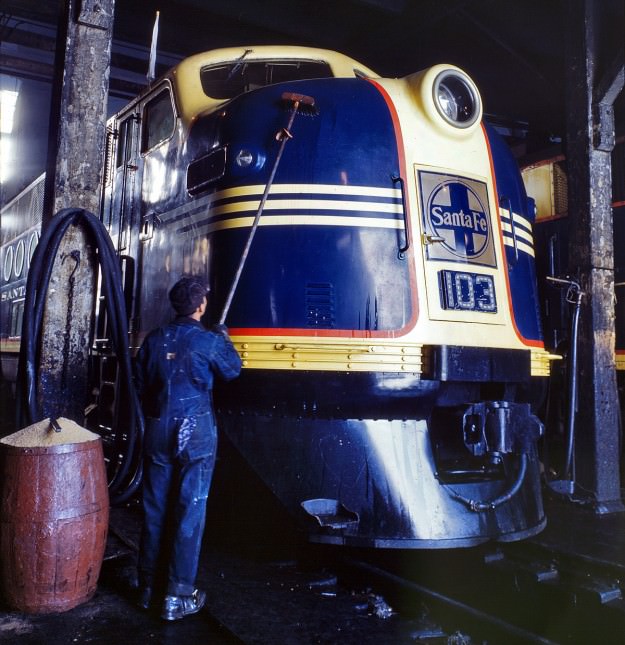
Inside the roundhouse at Argentine, Kansas, a Santa Fe diesel freight locomotive looms like polished machinery made monumental—its blue-and-cream nose framed by soot-dark beams, hoses, and the damp shine of the service bay floor. The bold “Santa Fe” herald and the number plate on the front read clearly, while riveted panels and curved streamlining hint at the railroad’s push toward newer power. Captured on 4×5 Kodachrome by Jack Delano, the color feels immediate: industrial blues, warm cream trim, and the muted grays of a hard-working shop.
A worker in coveralls steadies a long-handled brush against the locomotive’s face, reaching up in a motion that’s both routine and reverent. Washing isn’t just housekeeping in a locomotive roundhouse; it’s maintenance, inspection, and pride all at once—water, grime, and paint telling their own story about miles run and hours logged. In March 1943, with wartime traffic surging, even a brief pause for cleaning suggests a tightly managed rhythm of turning power, fueling it, and getting it back out to haul freight.
Details in the scene pull you closer: the thick hose coiled nearby, the sheen where water has streaked down the pilot, and the way the headlight housing crowns the rounded front. For readers searching railroad history, Santa Fe Railway images, or World War II-era diesel locomotives, this photograph offers a vivid look at the behind-the-scenes labor that kept the system moving. Delano’s transparency doesn’t just document equipment; it preserves the atmosphere of the shop—part cathedral of steel, part workplace where muscle, water, and machinery meet.