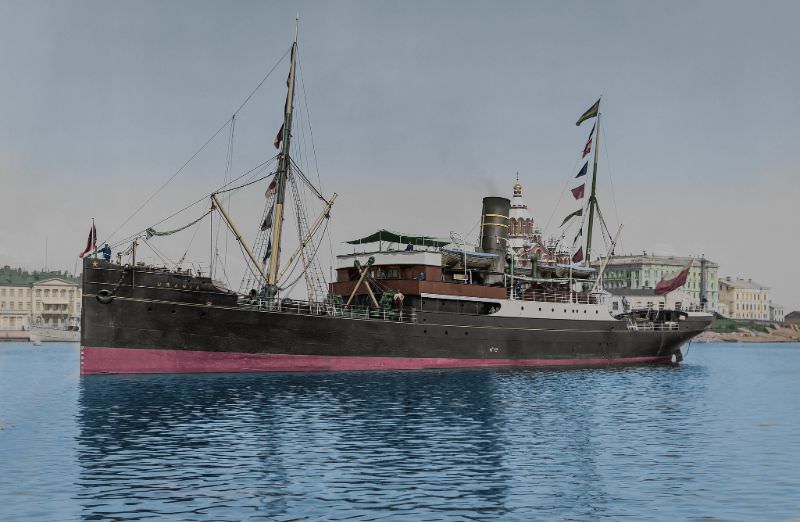
Moored in Helsinki’s Southern Harbour, the Finnish Steamship Co. Ltd. (FÅA) vessel S/S Urania sits low and steady, her dark hull meeting a calm stretch of water that mirrors the ship’s length. A neat run of portholes and the clean, white superstructure hint at the practical design of a combined passenger and cargo ship—built to carry people and goods in the same working rhythm. Rigging lines, a tall mast, and a compact funnel add a distinctly maritime silhouette, while signal flags bring a lively touch to the scene.
Along the deck, cargo gear and fittings speak to daily labour: loading, unloading, and the constant readiness to sail again. The ship’s proportions feel purposeful rather than ornamental, suggesting a coastal or regional route where reliability mattered as much as comfort. Details such as the lifeboat, railings, and shaded passenger areas evoke the in-between world of early steamship travel, when a harbour was both gateway and workplace.
Colorization lends the photograph a fresh immediacy, turning a documentary view into something closer to lived experience—the sheen of painted metal, the softened sky, and the crisp shoreline architecture behind the ship. The backdrop of Helsinki’s waterfront buildings frames Urania as part of the city’s commercial pulse, linking sea traffic to streets, markets, and warehouses just beyond the quay. For anyone exploring Finnish maritime history, FÅA’s fleet, or the evolution of passenger-cargo steamships, this image offers a vivid window onto harbour life and the era’s seaborne connections.