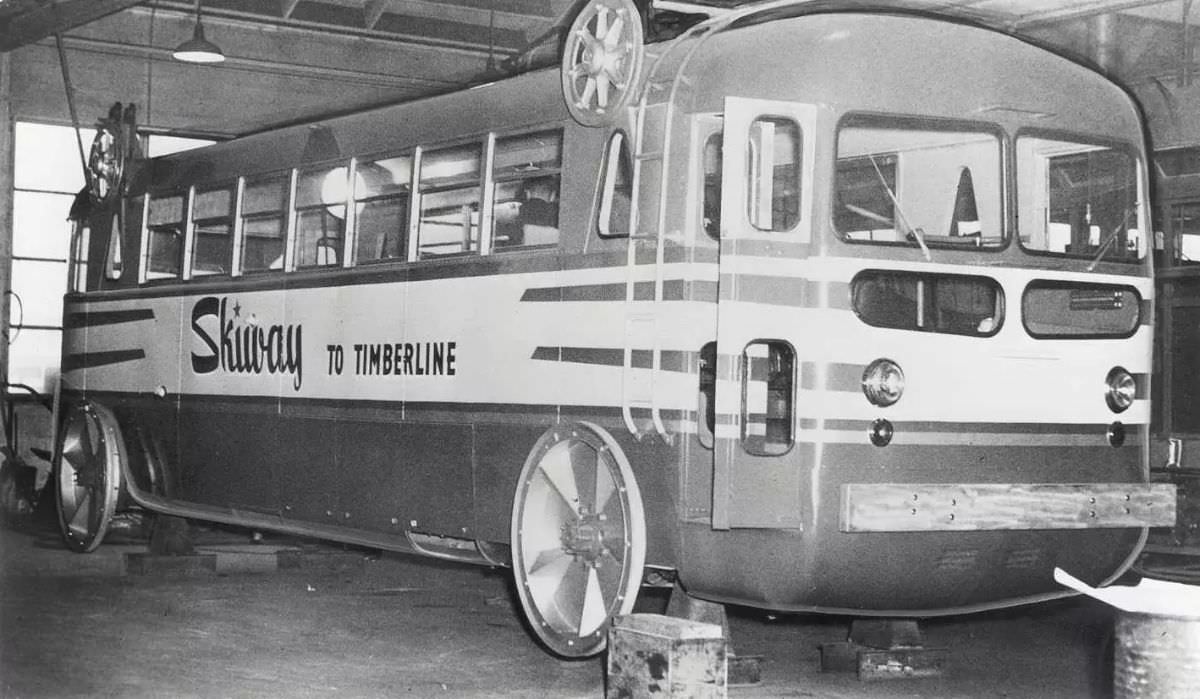
Parked beside the terminal building, the Skiway bus looks less like an ordinary coach and more like a rolling promise of winter adventure. The bold lettering—“Skiway to Timberline”—advertises its purpose plainly, while the streamlined body, broad windows, and distinctive wheel covers hint at the era’s fascination with modern transport. Indoors lighting and the utilitarian setting around it give the scene a workshop-and-depot feel, as if the vehicle is being readied for the next run up the mountain.
Behind that polished exterior sits a hard-won infrastructure story: planners and workers reportedly spent more than three years clearing a route for the Skiway and building the structure needed to make the service possible. That kind of timeline suggests challenging terrain, careful engineering, and a determination to connect city life with high-elevation recreation. In the context of travel history and “Inventions,” the Skiway stands out as an example of how new mobility systems were designed not just to move people, but to open landscapes to a growing leisure culture.
Details in the photo invite closer looking for anyone interested in transportation heritage, historic buses, or mountain travel. The vehicle’s rounded front, layered striping, and large passenger windows reflect a period when design and practicality were expected to share the road. As a piece of local transit history and ski tourism history, this image underscores how much planning, labor, and optimism went into creating a dedicated pathway to the slopes—and how the terminal served as the gateway to that journey.