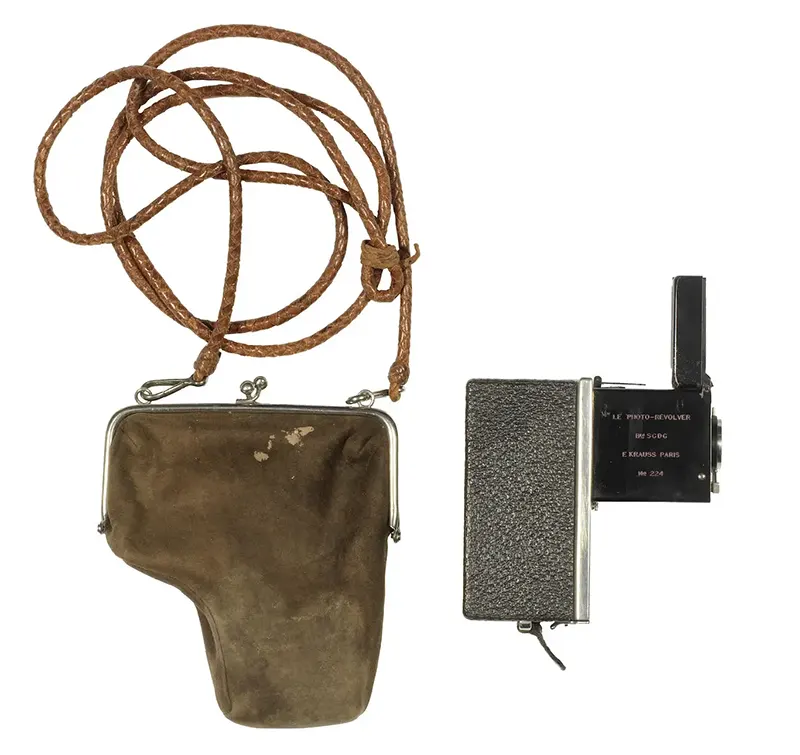
At first glance it feels like a prop from a mystery novel: a compact, pistol-shaped camera paired with a worn leather holster and cord, meant to hang at the ready. The object is labeled “Le Photo-Revolver,” and its clever silhouette borrows the language of weapons to sell the thrill of speed and spontaneity in picture‑making. Even laid out plainly against a blank background, the design carries a strange theatricality—half gadget, half disguise.
The metal body is boxy and utilitarian, with a textured grip surface and a small upright sight-like piece that hints at how the user would aim. Lettering on the side signals French manufacture and gives the device an air of official precision, as if it belongs to the world of instruments rather than toys. The holster, softened by use, suggests portability was central to its appeal: photography not as a careful ritual on a tripod, but as something you could carry, draw, and “shoot” in an instant.
In the broader story of inventions, the Le Photo Revolver sits at the crossroads of marketing bravado and technological curiosity. It reflects a moment when camera makers experimented with form factors that promised modernity—smaller, faster, and more adventurous—while leaning on metaphors that now feel unsettlingly playful. For collectors of antique cameras and historians of visual culture, this odd French-made contraption is a reminder that the history of photography is full of detours, where innovation sometimes arrived wearing a disguise.