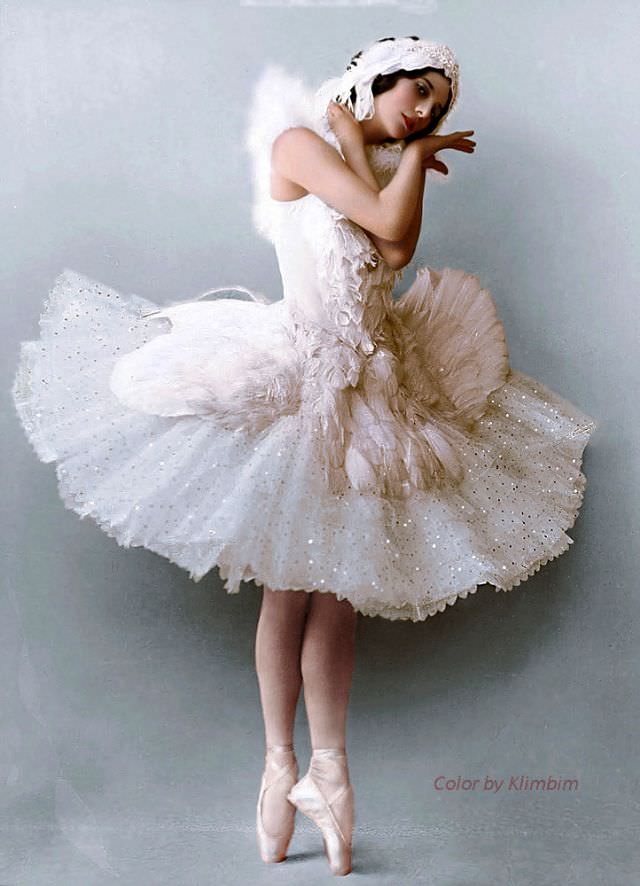
Poised on pointe, Anna Pavlova leans into the fragile hush of “The Dying Swan,” her arms folded like wings in mid-fold and her gaze turned inward. The colorization heightens every theatrical nuance: the cool, misty backdrop; the pale bloom of the tutu; and the soft warmth of skin against white satin and feathered trim. Even in stillness, the pose suggests movement—an instant suspended between lift and surrender.
Details in the costume do much of the storytelling, from the shimmering specks along the skirt to the textured bodice that gathers like plumage across her torso. The headpiece and delicate neck adornment frame her face without overpowering it, allowing expression to remain the focal point. That balance of technical control and emotional vulnerability is precisely why Pavlova’s interpretation became synonymous with early 20th-century ballet imagery.
For readers searching for Anna Pavlova, “The Dying Swan,” or classic ballet photographs from the 1900s, this restored portrait offers a vivid window into stage tradition and studio artistry. Colorization doesn’t change the choreography, but it can change how we feel the era—making fabric, light, and mood more immediate for modern eyes. It’s a reminder that ballet history often survives through such carefully staged moments, where performance, costume design, and photographic craft meet.