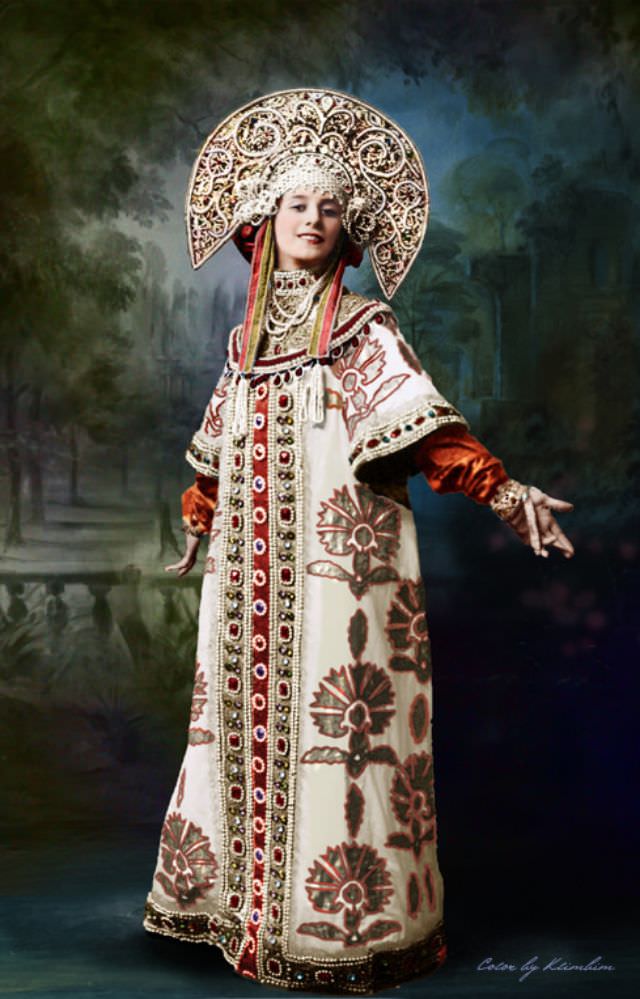
Radiant in a richly ornamented costume, Anna Pavlova stands poised with arms gently extended, her expression calm and self-assured. The elaborate headdress—arched like filigreed lace—frames her face, while jeweled trim and embroidered motifs run in vertical bands down the length of her gown. Set against a softly painted studio backdrop, the composition turns a theatrical portrait into a small stage, inviting the viewer to imagine the music and movement just beyond the stillness.
Colorization adds a striking immediacy to this 1900s-era image, drawing attention to the warm reds and golds that punctuate the costume’s intricate patterns. The textures read vividly: metallic detailing, beadwork, and heavy fabric that would have caught the light in performance. Pavlova’s controlled stance and delicate hand positions hint at ballet’s disciplined grace, even as the attire suggests a character role rather than everyday dress.
For readers searching for Anna Pavlova photos, early ballet history, or colorized portraits from the early 20th century, this post offers a memorable glimpse into the visual culture surrounding the stage. Portraits like this helped shape public fascination with famous dancers, blending fine photography, costume design, and carefully staged artistry. Seen today, it remains a reminder of how performance was preserved—one posed moment at a time—long before film became the dominant record of dance.