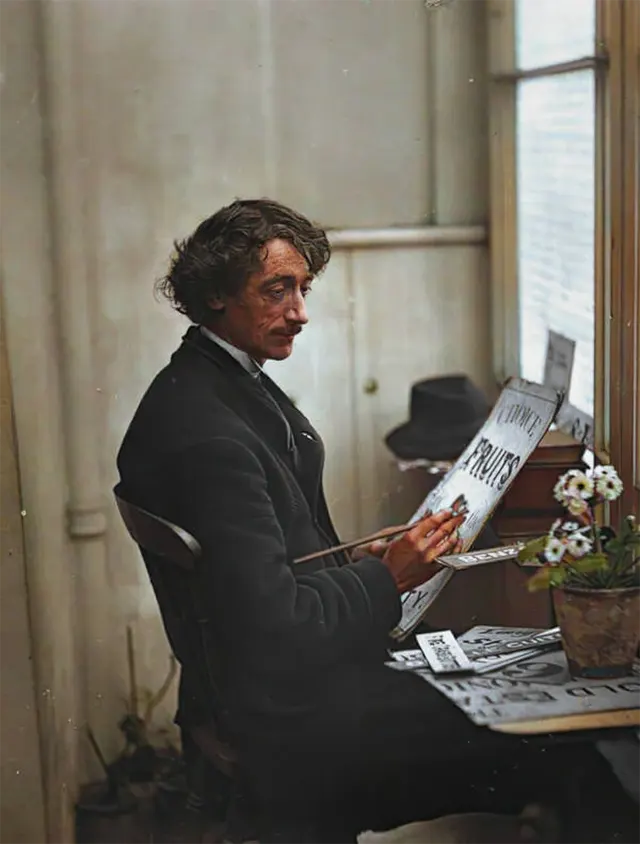
Leaning toward a bright window, a sign writer pauses mid-stroke in a modest studio, his brush poised over bold lettering on a board resting across his lap. The colorization brings out the quiet drama of the workspace: a dark jacket against pale walls, the soft glow of daylight, and the concentrated set of his face as he measures spacing and line weight by eye.
On the tabletop nearby, stacked cards and scraps of printed or painted text hint at the steady stream of commissions that kept such artisans busy—shopfronts, notices, and advertisements that shaped the look of streets long before standardized fonts and digital printing. A small pot of flowers and scattered materials soften the scene, reminding us that this was not only a workplace but also a room lived in, where craft and routine shared the same narrow surfaces.
In the 1890s, hand-lettered signs were a form of public language, and the people who made them combined artistry with practical precision, translating words into legible, attention-grabbing designs. For anyone interested in historical trades, vintage typography, or the everyday texture of late nineteenth-century work, this image offers a close, human view of the skilled hands behind the era’s visual culture.