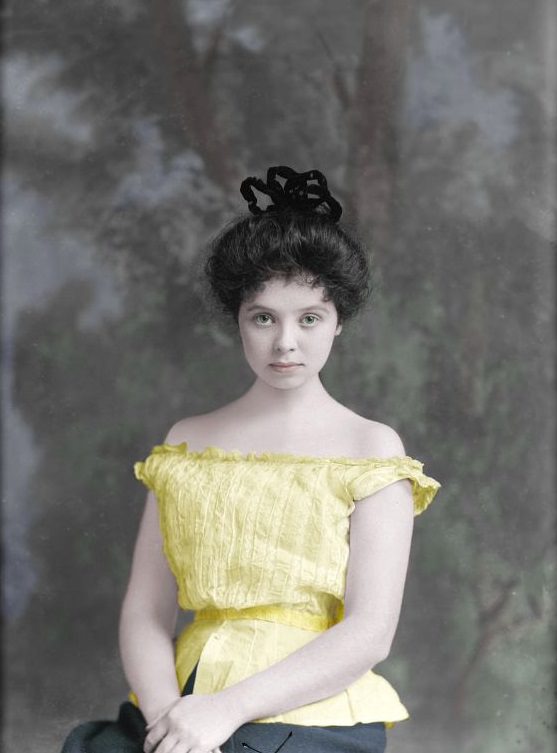
Miss M.C. Tate meets the camera with a steady, unguarded gaze that feels both formal and intimate, the kind of presence studio portraits were meant to preserve for family albums and future generations. Her dark hair is arranged high and carefully, topped with a dramatic bow that adds height and texture, while the softly mottled backdrop keeps all attention on her expression. The pose is composed without being stiff, suggesting a sitter accustomed to the conventions of portrait photography yet still distinctly herself.
Colorization brings fresh clarity to the details that might otherwise fade into monochrome: the luminous yellow of her off-the-shoulder bodice, the pale warmth of skin tones, and the contrast of deep hair against a muted background. The dress reads as lightweight and delicately structured, with gentle gathering and a sash-like band that defines the waist and hints at the fashion preferences of her era. Subtle shading and restored tones make the image feel less like a distant artifact and more like a moment paused mid-breath.
For readers searching family history, women’s fashion, or early portrait photography, “Tate, Miss M.C.” offers a compelling example of how studio images communicated identity through grooming, posture, and clothing. Without needing a specific place or date to anchor it, the photograph still speaks to the social ritual of being photographed—choosing one’s best attire, holding still, and presenting a public self. As a restored and colorized historical photo, it invites closer looking and renewed curiosity about the life behind the name.