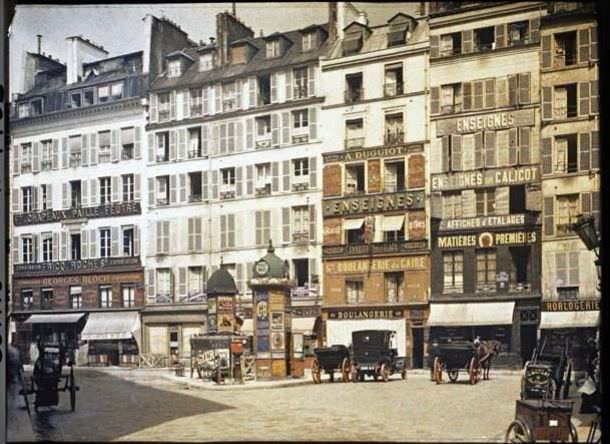
Shopfront lettering climbs the tall façades along the rue d’Aboukir, turning the street itself into a directory of trades. Stéphane Passet’s colorization brings out the warm stone, the pale shutters, and the painted advertisements stacked floor by floor—“enseignes,” “boulangerie,” and other commercial cues that make the district feel busy even when the roadway looks momentarily calm. The view reads like a slice of everyday Parisian commerce, where architecture and marketing share the same vertical space.
At street level, carts and early motor vehicles line the curb, hinting at a city in transition as horsepower and engines mingle in the same frame. A small kiosk-like structure and clusters of posters add to the sense of an urban rhythm: messages, goods, and passengers all circulating through the same narrow corridor. Even without pinpointing an exact year, the mix of transport and signage suggests the early modern era when streets served simultaneously as marketplace, thoroughfare, and billboard.
Color, here, is more than decoration; it restores legibility to details that often fade in monochrome reproductions of historical photography. The eye can travel from the muted rooftops down to the shop awnings and the painted walls, reading the neighborhood’s economic life in textures and tones. For anyone searching for rue d’Aboukir history, Paris street scenes, or Stéphane Passet colorized photography, this image offers a richly grounded glimpse of the city’s commercial heartbeat.