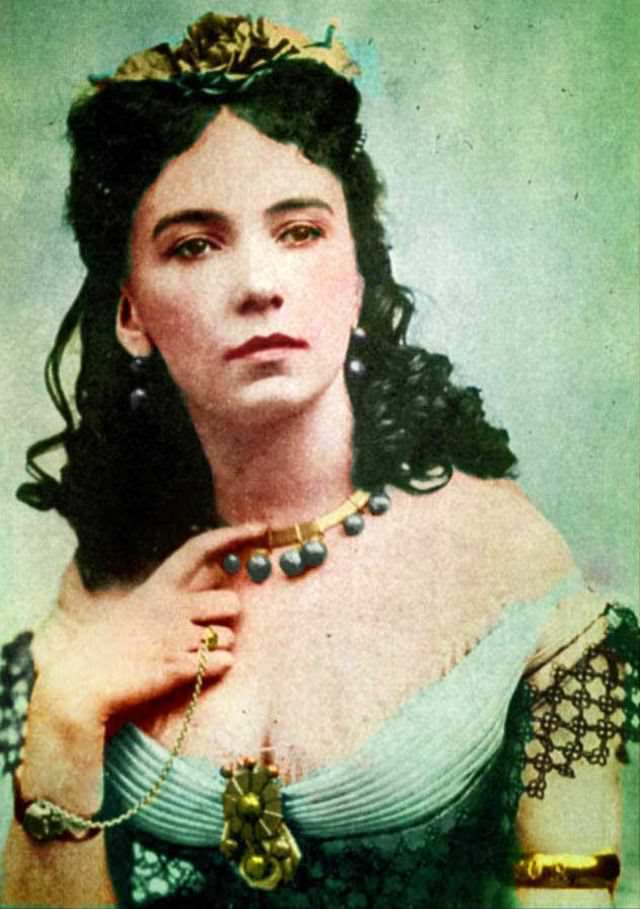
Cora Pearl faces the viewer with a practiced stillness that feels both intimate and theatrical, her gaze drifting slightly off-center as if already aware of the audience beyond the frame. The colorization softens the severity often associated with early studio portraits, lending warmth to her complexion while keeping the mood poised and controlled. Dark curls, carefully arranged, frame a face that reads as self-possessed—more performance than confession, more public persona than private moment.
Jewelry and dress do much of the storytelling here: a bold necklace with matching drops, a prominent pendant, and rings that catch the eye near her collarbone, where her hand lingers in a gesture that seems deliberately composed. The low neckline and patterned sleeves suggest fashionable display rather than mere documentation, reinforcing the title’s portrait of extravagance. Even without a visible backdrop of Parisian luxury, the styling communicates the social theater surrounding a celebrated courtesan and the allure that drew aristocratic and royal admirers.
André-Adolphe-Eugène Disdéri’s association with mid-19th-century portrait photography adds another layer of meaning to this 1854 image, linking celebrity, commerce, and the rapidly evolving visual culture of the era. In a world where reputation could be curated as carefully as hair and jewels, such portraits functioned as both keepsake and advertisement, shaping how figures like Pearl were remembered. For readers interested in Paris history, courtesans of the Second Empire, and early photography, this colorized portrait offers a vivid doorway into the aesthetics—and calculations—of fame.