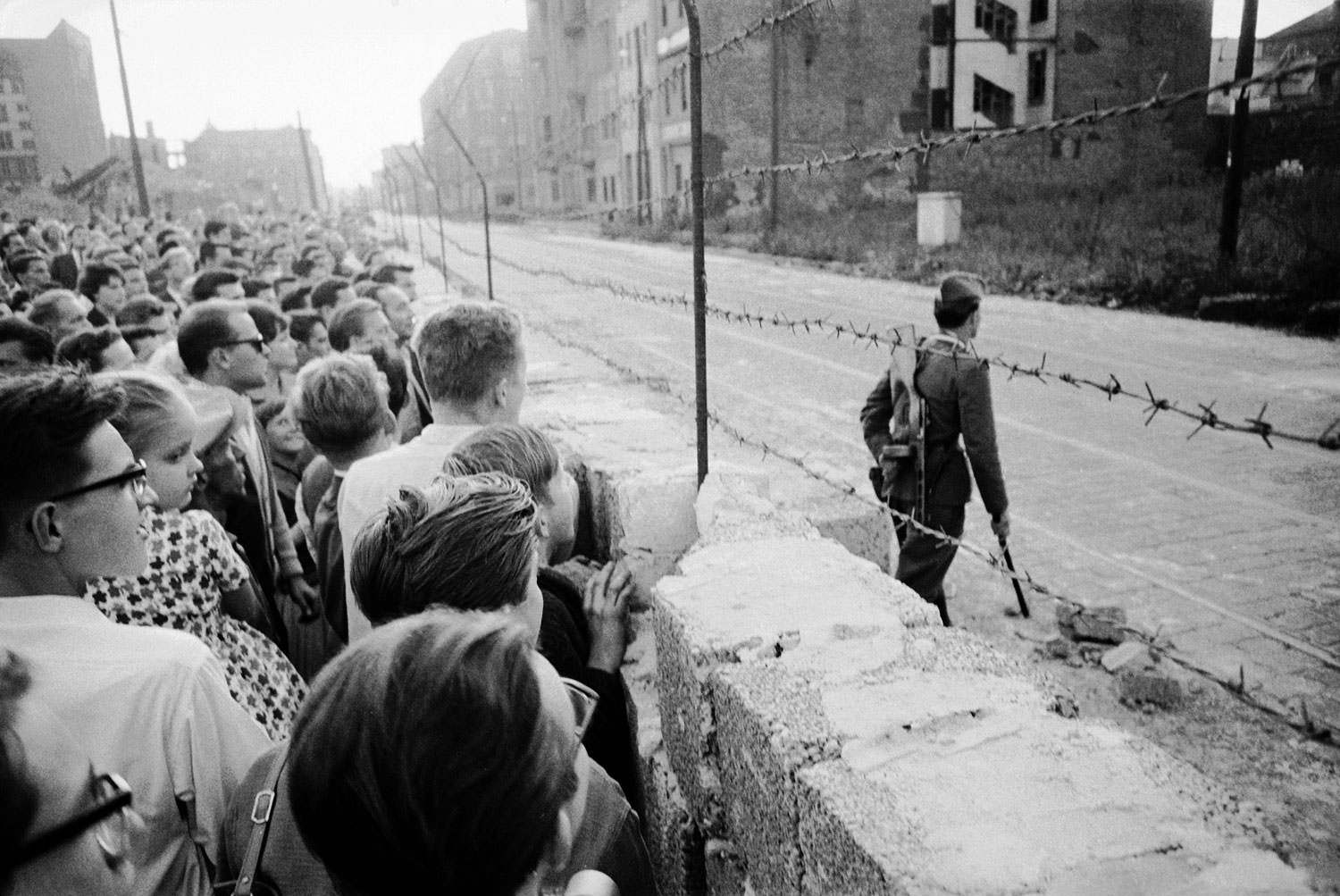
Along the edge of a raw concrete barrier topped with barbed wire, West Berlin residents press forward, craning their necks for a clearer view of a new and ominous border. Faces crowd the left side of the frame—men, women, and children packed shoulder to shoulder—while an East German policeman walks his patrol on the other side, rifle slung and posture rigid. The street between them feels unusually wide, turned overnight from an ordinary urban thoroughfare into a guarded line of separation.
August 1961 was the moment the Berlin Wall began to harden from makeshift obstacles into a system meant to stop movement and sever everyday connections. The stark geometry of wire, posts, and concrete creates a visual language of the Cold War: control, surveillance, and the sudden narrowing of lives. Even without hearing the murmurs of the onlookers, the photograph conveys the tense curiosity and disbelief that accompanied the Wall’s earliest days.
What makes this historical photo so powerful is its closeness—civilians watching authority at arm’s length, yet unable to cross even a few meters of asphalt. It captures the human reality behind political slogans: the Berlin Wall as lived experience, not just a headline, with families and neighbors reduced to spectators. For readers searching for Berlin Wall history, Cold War Berlin, or daily life in divided Germany, the scene offers a vivid entry point into a city split and a world reshaped.