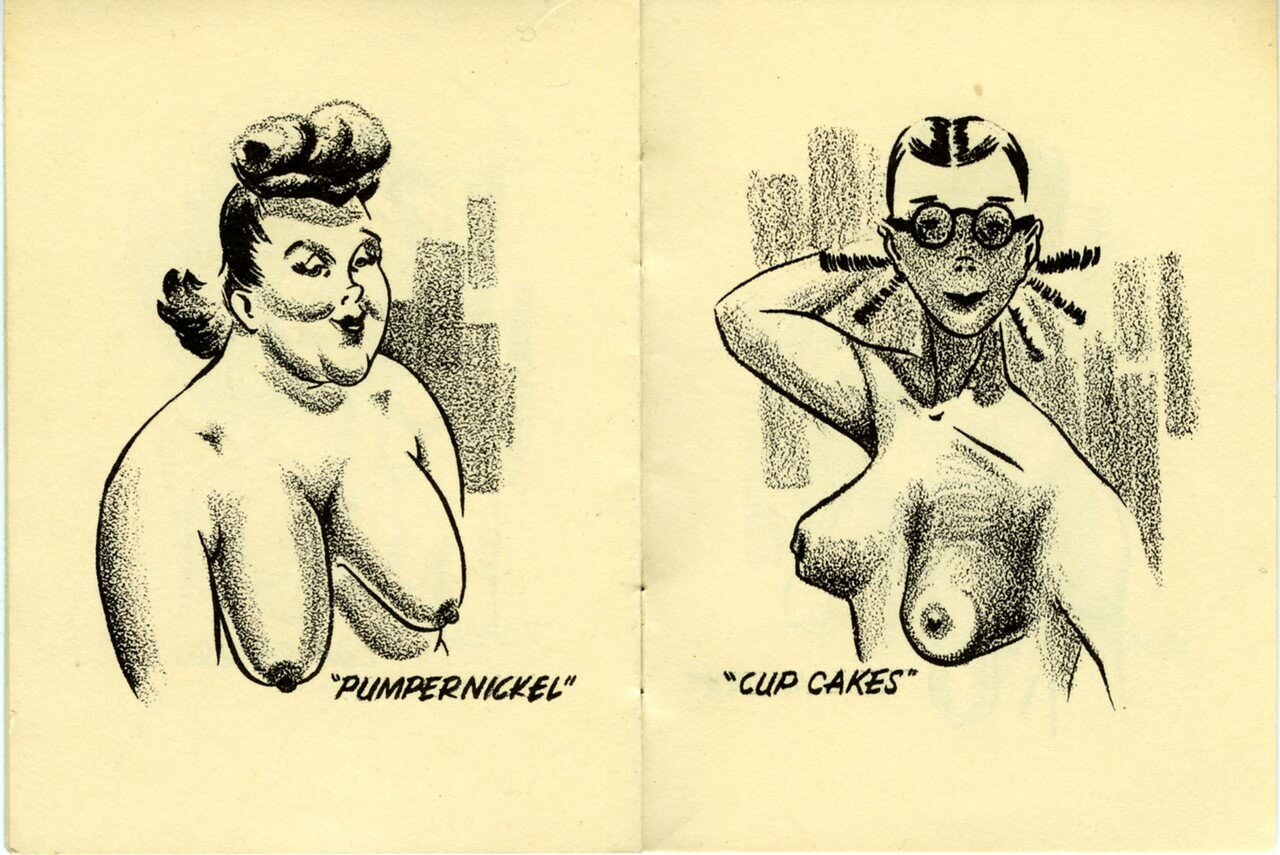
Humor sits right on the page in this cheeky two-panel cartoon, where two nude figures are presented like “choices” in a joke menu: one labeled “Pumpernickel,” the other “Cup Cakes.” The artist’s linework leans into caricature—bold outlines, exaggerated features, and playful facial expressions—turning the human body into a punchline built from familiar food words. Even without a caption beyond the labels, the gag is clear: appetite and attraction get tangled up, and the viewer is invited to laugh at the comparison.
On the left, “Pumpernickel” is rendered with a heavy, rounded silhouette and a confident, almost smug look, her hair styled high and dramatic. Across the fold, “Cup Cakes” shifts the tone: a slimmer figure with short hair and round glasses, posed with arms behind the head as if modeling, yet still drawn with deliberate exaggeration. The simple background shading keeps attention on posture and expression, while the handwritten labels anchor the joke in everyday bakery imagery.
Seen today, “Pumpernickel or Cup cakes” reads as a small time capsule of bawdy, page-turn humor—part pin-up parody, part streetwise cartooning. It also hints at how earlier popular art mixed flirtation, body commentary, and wordplay without much subtlety, reflecting the era’s casual stereotypes as much as its comic instincts. For collectors and history-minded readers, this piece is a reminder that archival ephemera isn’t always solemn; sometimes it’s “funny” in the blunt, eyebrow-raising way people once shared a laugh.