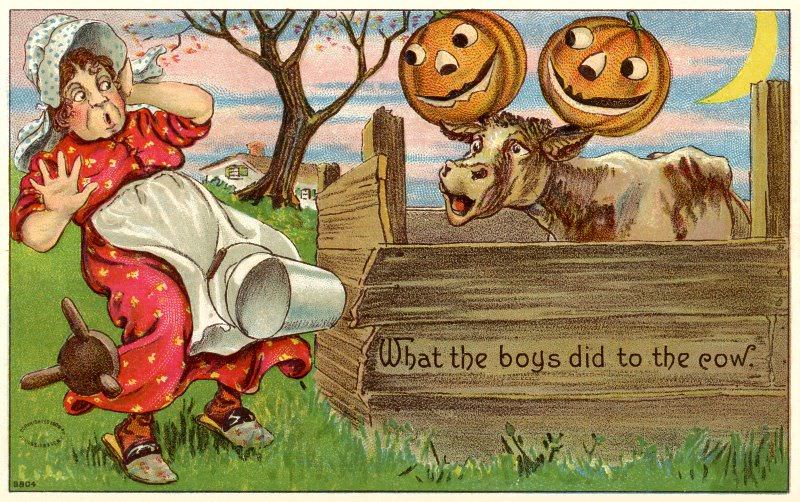
A startled farmwoman in a red dress stumbles backward across the grass, her bonnet flying and a metal milk pail tipping as if the commotion has just erupted at her feet. The scene is rendered in bright, storybook colors, with a yard fence splitting the frame and the hand-lettered caption—“What the boys did to the cow”—nailed like a plank sign for everyone to read. Even without a stated place or date, the rural setting, sturdy shoes, and everyday tools evoke the familiar rhythms of farm life that made such humor instantly recognizable.
Behind the wooden fence, the cow becomes the punchline: two jack-o’-lantern pumpkins have been set where the animal’s horns would be, turning a barnyard creature into a Halloween prank. The cow’s wide-eyed, open-mouthed expression mirrors the woman’s shock, while a crescent moon and bare-limbed trees in the background hint at autumn nights and seasonal mischief. As a piece of illustrated ephemera, it leans into exaggeration—big faces, bold outlines, and playful menace—to sell the joke at a glance.
Humor like this offers a small window into popular entertainment and holiday traditions, when practical jokes and farmyard antics were common themes in postcards and prints. The artwork balances domestic labor (milking, pails, the daily routine) with the sudden interruption of youthful misbehavior, making it both a comic scene and a cultural snapshot. For readers interested in vintage Halloween imagery, rural Americana, or antique postcard art, “What the boys did to the cow” is a lively reminder of how earlier generations pictured countryside life—equal parts work, wonder, and troublemaking.