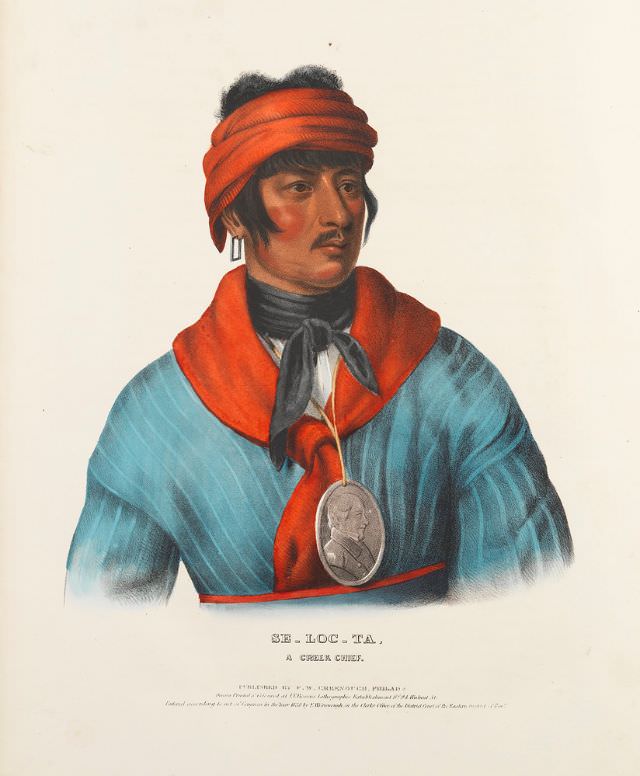
Se-Loc-Ta is presented here with a steady, outward-looking gaze that gives the portrait an air of authority rather than spectacle. A vivid red headwrap and matching mantle frame his face, while a cool blue garment beneath creates a striking contrast that draws the eye to the center of the composition. The careful shading of the cheeks, the crisp line of the mouth, and the small metal earring suggest an artist intent on recording recognizable features and status with precision.
One detail invites lingering attention: the large oval medallion hanging at his chest, bearing the profile of another figure. Whether read as a diplomatic token, an emblem of alliance, or a mark of the era’s shifting power relations, it signals how Native leadership was often forced to operate in a world increasingly defined by exchange, negotiation, and imposed symbols. The restrained background leaves the clothing, adornment, and posture to carry the narrative, turning the sitter into both an individual and a representative figure.
For readers searching for Creek history, Indigenous portraits, or early American artwork, this image offers a compelling entry point into the visual language used to depict Native leaders. The title, “Se-Loc-Ta, A Creek Chief,” frames the subject through a political role, while the color and composition underscore dignity and presence. As a historical print, it also reminds us to consider who commissioned such images, how they circulated, and what they reveal—and conceal—about the people they portray.