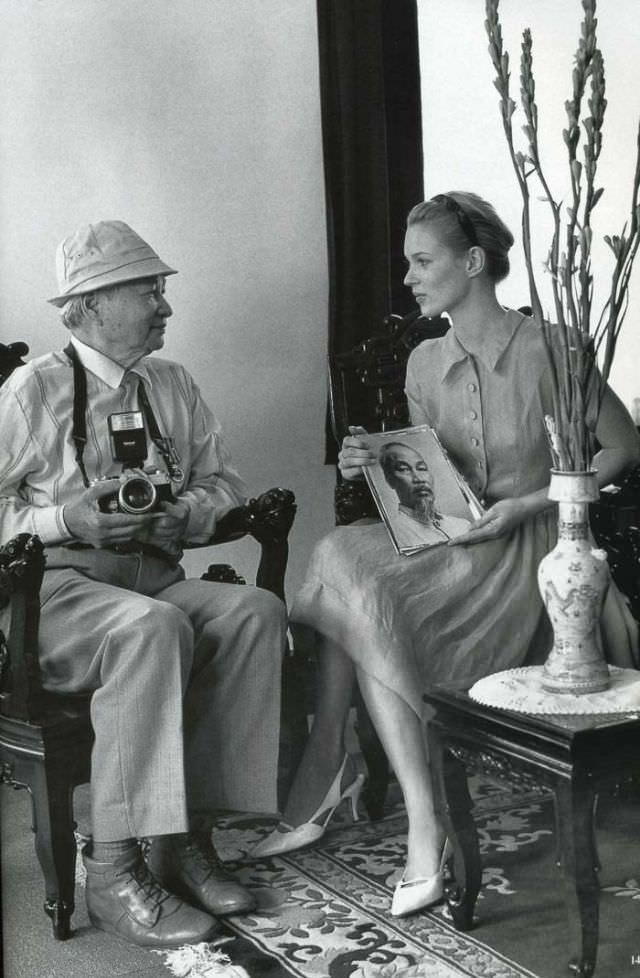
A quiet, conversational energy runs through this Bruce Weber fashion moment, where Kate Moss sits poised in a simple, buttoned dress and sharp heels, her profile turned toward an older man dressed like a seasoned traveler. He cradles a camera with a flash unit and wears a brimmed safari-style hat, the props signaling reportage and adventure even within an elegant interior. The black-and-white palette heightens the contrast between her polished 1990s minimalism and his field-ready attire, as if Vogue has staged a meeting between runway restraint and on-the-ground storytelling.
Between them, Moss holds a book or magazine open to a striking portrait, turning the scene into a study of looking: subject, photographer, and image within the image. Their gazes suggest an exchange of ideas rather than a posed smile, lending the shoot a candid, behind-the-scenes feeling that Bruce Weber is known for. Ornate chairs, a patterned rug, and a tall vase of long-stemmed blooms frame the pair, balancing domestic luxury with the title’s promise of “Jungle Fever” and a cinematic nod to ‘Good Morning Vietnam.’
Fashion and culture intertwine here in a way that feels distinctly mid-1990s Vogue US—editorial narrative, film reference, and documentary cues folded into a single composition. The styling reads clean and controlled, while the camera gear and travel wardrobe imply heat, distance, and the romance of assignment photography. As an SEO-friendly snapshot of Kate Moss, Bruce Weber, Vogue editorial storytelling, and 1996 fashion culture, the image captures how magazines used atmosphere and reference to sell not just clothes, but an entire mood.