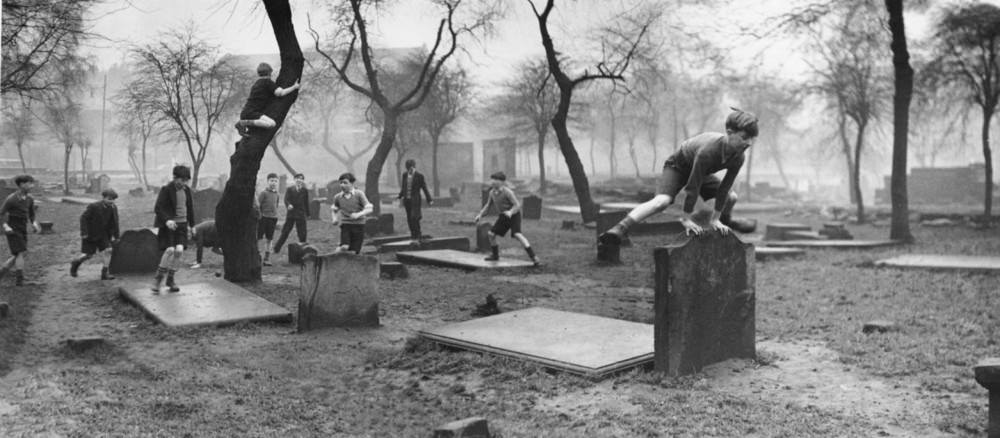
Between leaning headstones and bare winter trees, boys from the Gorbals turn the Corporation Burial Ground on Rutherglen Road into an improvised playground in 1948. One lad vaults a gravestone as if it were gym equipment, while others gather, run, and clamber across the damp grass, their energy cutting through the cemetery’s quiet. The scene is both striking and familiar: childhood finding room to breathe wherever a patch of open ground exists.
In a district short on parks and back greens, this burial ground stands out as one of the few pockets of greenery, even if it comes edged with stone and memory. The photograph’s misty background and scattered markers suggest a landscape shaped by urban pressure, where recreation and daily life spill into spaces not designed for it. What might read as irreverence is also resourcefulness—post-war play making do with what the neighbourhood can offer.
Details like caps, shorts, and sturdy shoes anchor the moment in mid-century Britain, when street games and rough-and-ready athletics were part of growing up. For readers interested in social history, Glasgow’s Gorbals, and working-class childhoods, the image adds texture to the story of how communities used shared ground. It’s a compelling example of vintage UK photography, capturing the uneasy beauty of play among gravestones and the resilience of young lives in the city.