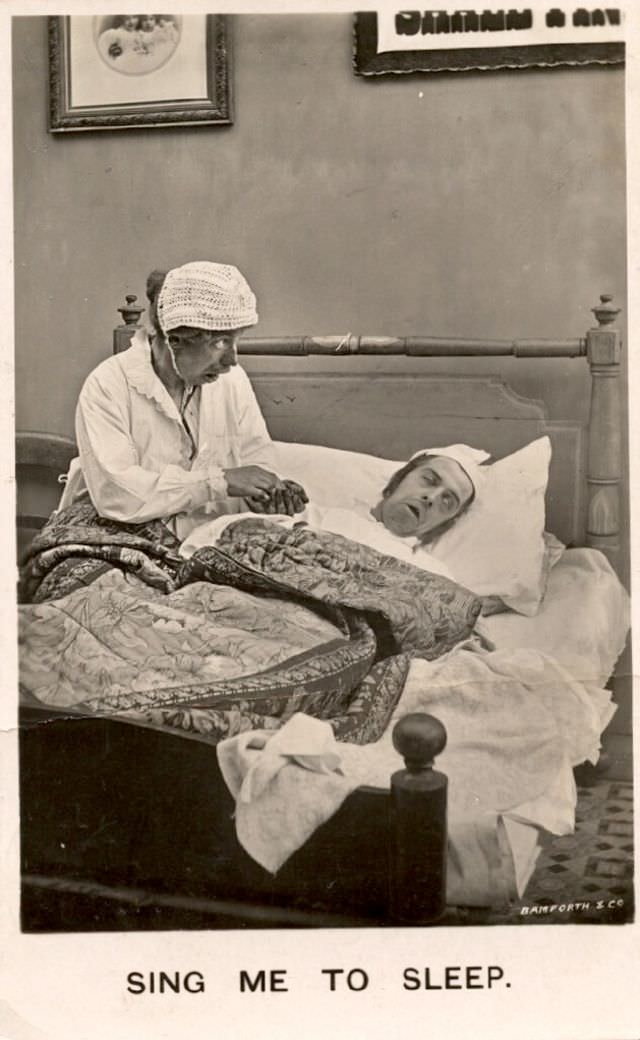
A bedside scene, staged with theatrical clarity, pairs a tucked-in patient with a caretaker leaning close, hands poised as if to soothe. The iron bedframe, patterned quilt, and neatly arranged pillows evoke the feel of an early domestic interior, while the patient’s exaggerated expression turns the moment into gentle comedy. Beneath it all, the title “Sing me to sleep” reads like a punchline and an invitation to imagine the missing sound.
On the wall above the bed hangs a small framed picture and a bold sign that echoes the caption, reinforcing that this is more performance than private life. The caretaker’s cap and simple blouse suggest a nurse or household helper, a familiar figure in old postcard humor where everyday roles become props for storytelling. Even without knowing the exact setting, the photo’s composition—close, intimate, and carefully arranged—signals a posed studio-style gag meant to be instantly understood.
“Sing me to sleep” works because it plays on a timeless ritual: comfort at the end of the day, requested with a bit of mischief. For readers drawn to vintage humor photography, antique postcard aesthetics, and historical domestic scenes, this image offers a charming glimpse into how earlier generations staged jokes using ordinary bedrooms and recognizable characters. It’s a small, funny window into the culture of sentimentality and satire that lived side by side in early popular images.