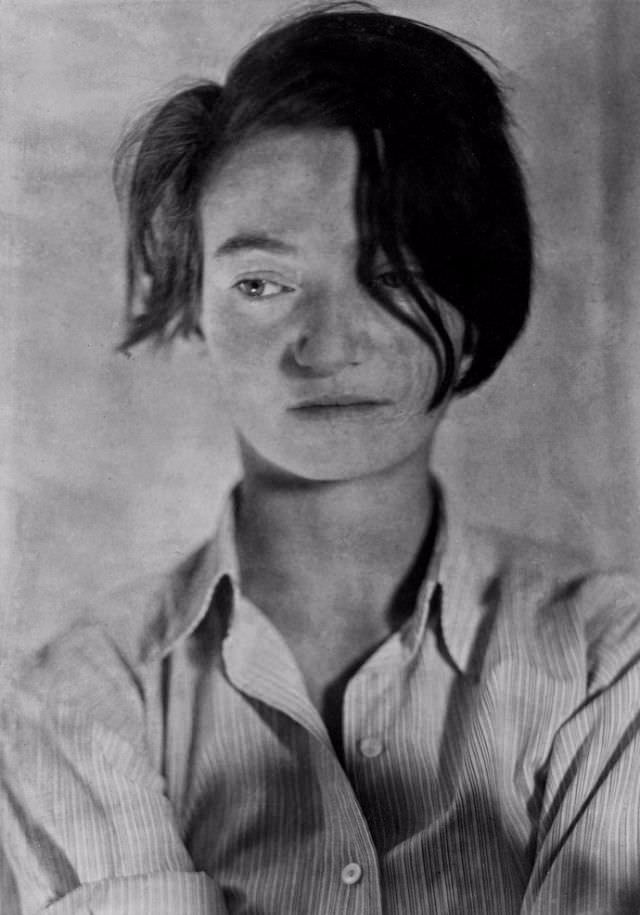
A cropped, side-swept haircut and a plain button-up shirt create a look that reads as deliberate rather than accidental, the kind of pared-back styling that quietly pushed against expectations in 1930s women’s fashion. The sitter’s steady gaze and relaxed, unfussy posture suggest confidence without theatrics—an attitude that mattered as much as any garment. Even in a simple portrait, the sharp lines of hair and collar do the talking, hinting at a tomboy sensibility built on clarity, comfort, and control.
Tomboy styles of the 1930s weren’t merely about borrowing menswear; they were about reshaping what “appropriate” could mean in everyday dress. Collared shirts, practical cuts, and a refusal of excessive ornament made room for movement and modern self-presentation, especially in a decade defined by economic strain and changing social roles. This kind of style sits at the crossroads of fashion and culture, where personal identity meets the pressures—and possibilities—of the era.
Seen up close, the portrait becomes a small manifesto of rebellious edge: minimal accessories, a straightforward silhouette, and hair worn with an almost boyish nonchalance. For readers searching vintage fashion history, 1930s women’s hairstyles, or tomboy fashion inspiration, the image offers a compelling reminder that rebellion can be subtle and still transformative. It’s a moment where simplicity looks radical, and where a “sharp” style signals a new way of taking up space.