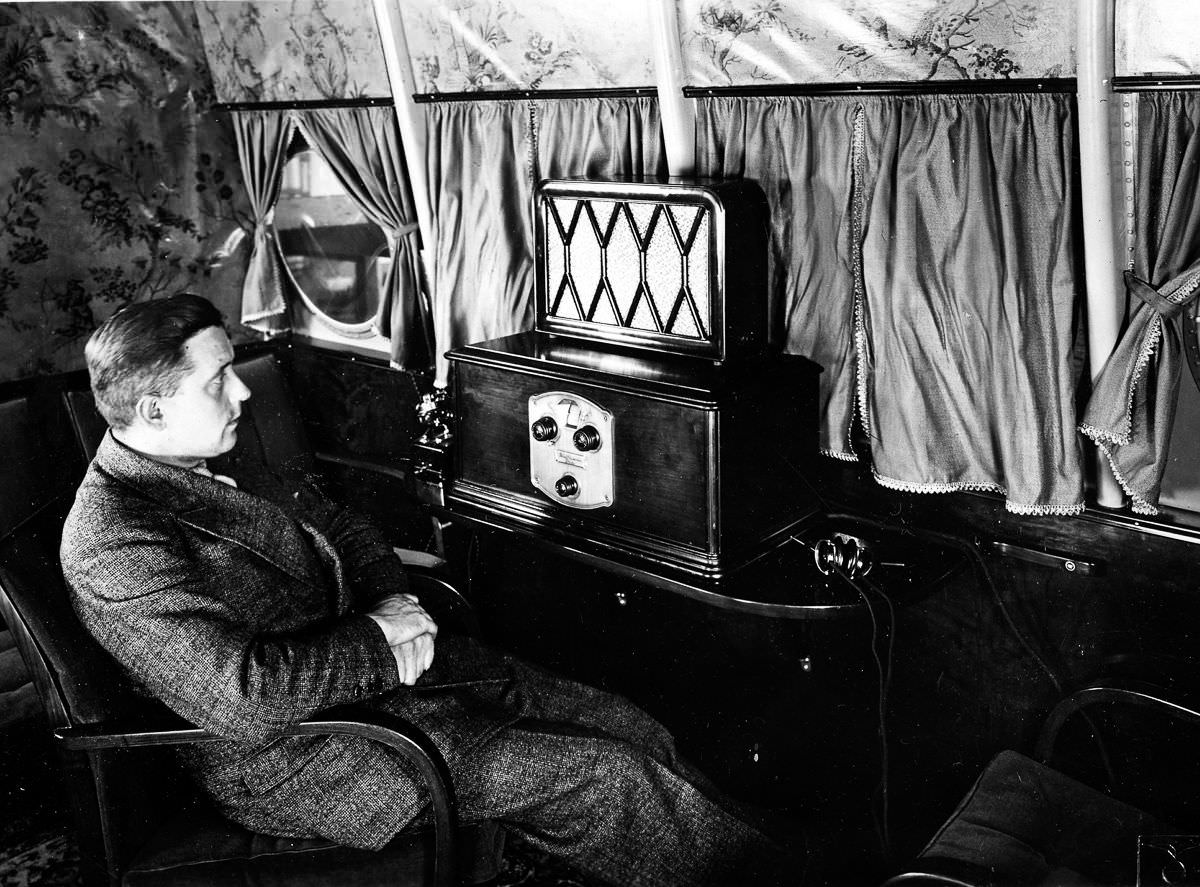
Seated in a cushioned chair inside a flying boat lounge, a radio operator listens intently as a tabletop receiver hums with possibility. The set’s prominent knobs and speaker grille dominate the small table, while curtained windows and patterned wall coverings give the cabin an unexpectedly domestic, almost parlor-like comfort. It’s a quiet moment of concentration set against the larger drama of early air travel.
Airborne radio reception in 1930 was more than entertainment; it represented connection, coordination, and confidence in modern engineering. Testing the signal from within the passenger space hints at how flying boats blended luxury with practical innovation, making long-distance journeys feel less isolated. The photograph’s focus on equipment and posture underscores a period when wireless technology was still novel enough to be staged, examined, and proudly demonstrated.
Details like the draped curtains, the compact furnishings, and the neatly integrated wiring help tell a broader story about the design ambitions of early aviation. For readers interested in inventions and the history of communication, this scene captures a transitional era when radios moved from experimental apparatus to everyday companion—even at altitude. Framed by the post title’s date, it offers a grounded glimpse of how progress sounded inside a 1930s flying boat.