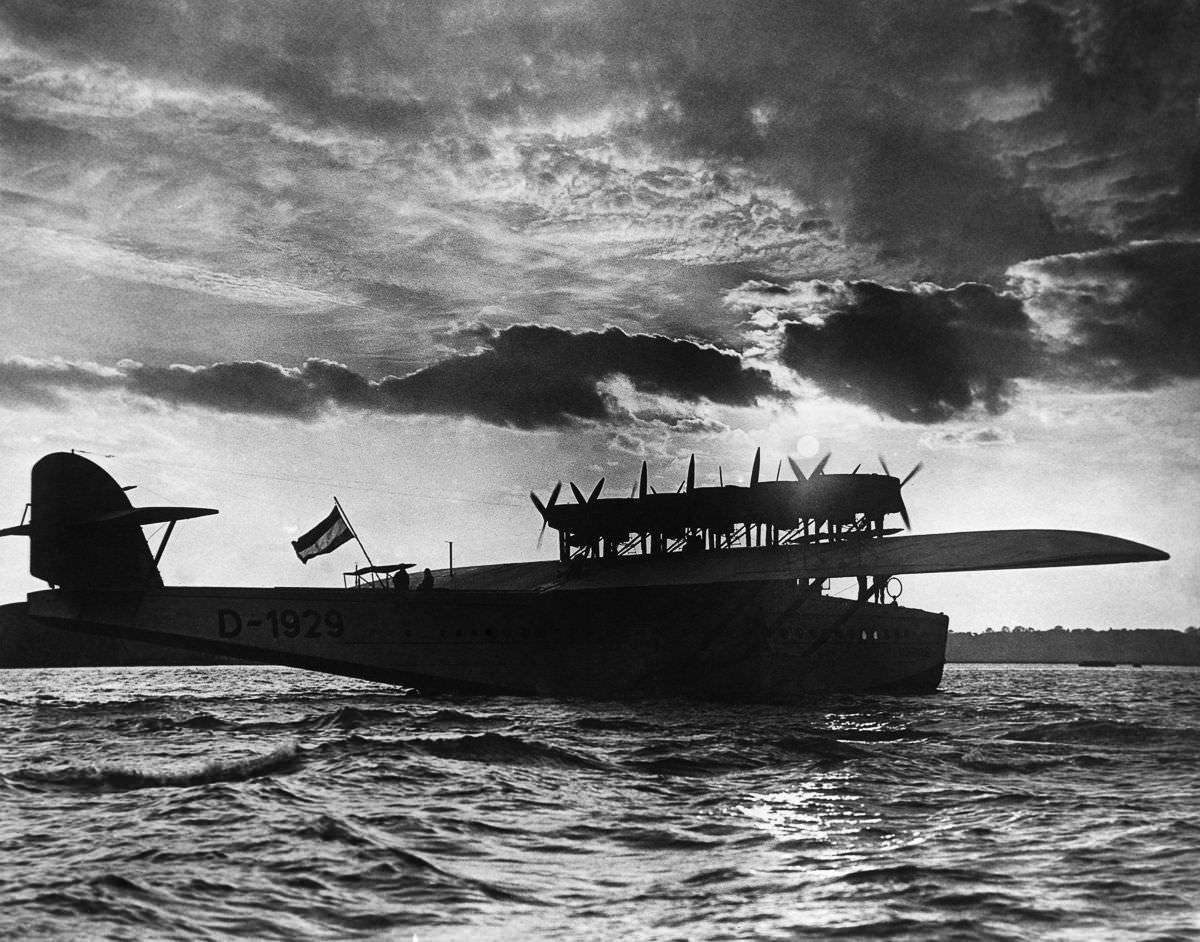
Low on the horizon, a great flying boat sits on choppy water in dramatic silhouette, its long wing stretching almost the full width of the frame. Multiple propellers stand out against a bright break in the clouds, while the hull rides like a ship, reminding us how early aviation borrowed as much from maritime design as from the land-based aeroplane. A flag flutters from the craft, and a bold registration number is visible on the side, small details that make the scene feel immediate rather than distant.
In 1930, an arrival like this in England would have signaled more than a successful landing—it hinted at a future where seas and skies became part of the same travel network. Flying boats promised range, prestige, and the ability to alight where runways were scarce, turning bays and estuaries into gateways for long-distance routes. The photograph’s low angle and backlit sky emphasize scale and ambition, capturing the mix of engineering confidence and weather-bound uncertainty that defined interwar air travel.
For readers drawn to inventions and transport history, the image offers a concise snapshot of the era’s bold experimentation: an aircraft built to behave like a vessel, powered for flight yet at home on open water. The textured surface of the waves, the shadowed machinery atop the wing, and the heavy cloud cover create a moody atmosphere that suits the story of early air routes to Britain. As a piece of aviation heritage, it invites closer looking—and a renewed appreciation for the transitional technology that helped connect continents before modern airports took over.