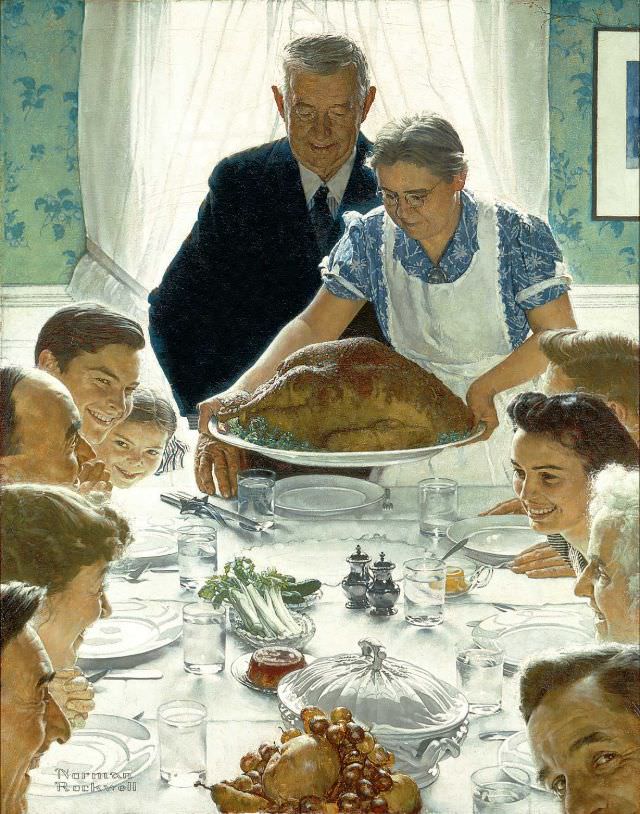
Norman Rockwell’s “Freedom from Want,” published in February 1943 as part of his Four Freedoms series, places a holiday meal at the center of a national ideal. A bright dining room opens onto a long white table, where eager faces lean in toward the moment everyone has been waiting for. At the heart of the scene, a roasted turkey arrives like a ceremonial centerpiece, carried in by an older couple whose calm pride steadies the bustle around them.
Details do much of the storytelling: the crisp tablecloth, plain glasses of water, polished cutlery, and small dishes gathered without fuss. Rockwell’s composition invites the viewer into the empty place setting at the near end of the table, turning a private family ritual into a shared invitation. The mood is affectionate and hopeful, with sunlight filtering through a curtain and a patterned wall that quietly frames the warmth of the room.
Behind the famous Thanksgiving imagery lies the wartime message that made this artwork resonate in 1943—an argument that “freedom from want” is as much about security and dignity as it is about abundance. Rockwell’s painting has become one of the most recognizable American illustrations of World War II-era home front culture, balancing idealism with carefully observed domestic realism. For readers searching for The Four Freedoms, Freedom from Want, or Norman Rockwell 1943, this scene remains an enduring symbol of comfort, community, and the promise of well-being.