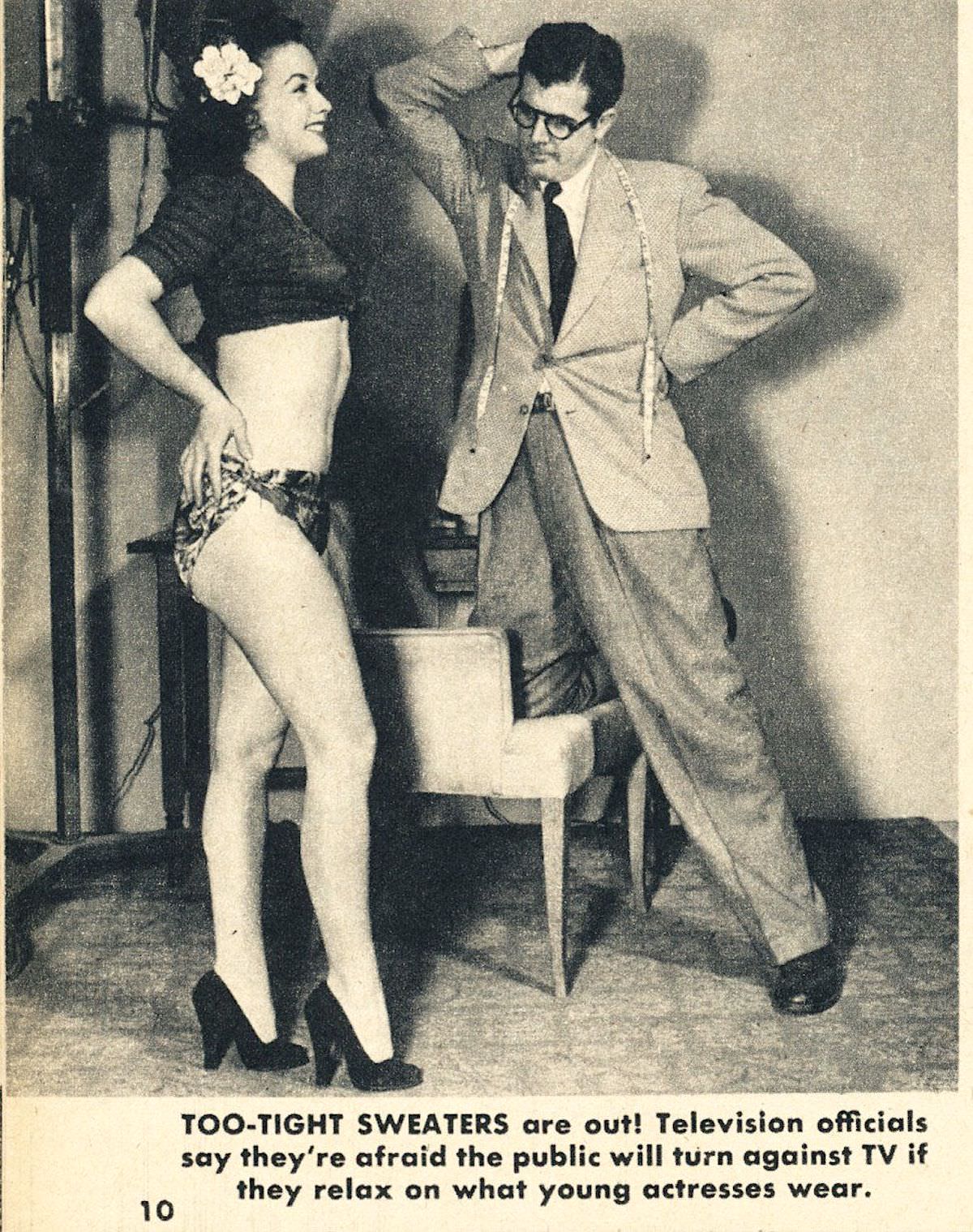
A stagey, behind-the-scenes moment unfolds as a smiling young performer poses in heels and a fitted top while a bespectacled man in a suit—tape measure draped around his neck—sizes up the scene with theatrical seriousness. The contrast between her confident stance and his measuring posture feels like a snapshot of the entertainment industry’s push and pull: glamour on display, rules close at hand. Even without a clear production credit, the setting reads as a studio or backstage corner, where wardrobe choices became part of the story.
The caption at the bottom spells out the anxiety in plain language: “Too-tight sweaters are out!” and “Television officials” worry about public backlash if standards loosen. It’s a revealing little slice of Movies & TV history, pointing to an era when broadcast taste-makers tried to manage not only scripts and performances, but also the silhouette of what audiences saw on screen. Here, clothing isn’t just fashion—it’s framed as a moral and commercial calculation, policed with a measuring tape and a raised eyebrow.
For readers interested in classic television culture, censorship, and vintage style, this photo is an ideal conversation starter about who got to decide what was “acceptable” entertainment. The humor of the setup doesn’t erase the power dynamic; it highlights how women’s wardrobes were scrutinized as symbols of broader social change. “Too-tight sweaters” becomes more than a catchy title—it’s shorthand for the ongoing negotiation between desire, decorum, and the business of keeping viewers tuned in.