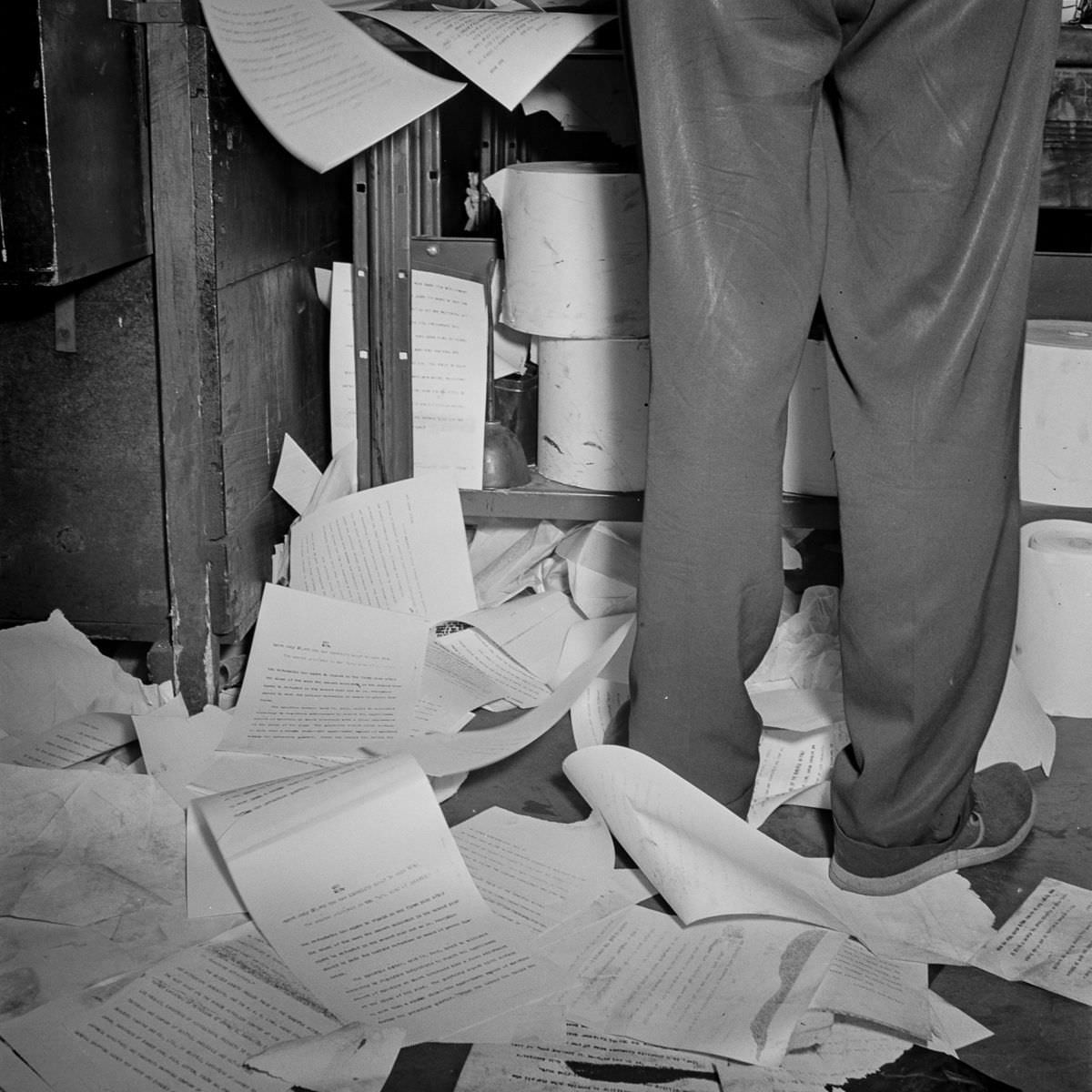
Paper litters the floor in a chaotic fan of freshly duplicated dispatches, the kind of mess that only happens when a mimeograph is pushed past polite limits. A pair of trouser legs and sturdy shoes anchor the scene, suggesting a worker caught mid-rush while pages tumble out faster than they can be gathered. In the background, shelves and machine parts crowd the cramped workspace, reinforcing the feeling of a busy production corner rather than a tidy office.
Deadlines shaped the physical world of communication, and this photograph makes that pressure visible: the scatter of sheets becomes a record of urgency. Before digital publishing and instant updates, getting information out often meant running copy at speed, collating by hand, and accepting waste as the price of timeliness. The mimeograph—an invention built for quick reproduction—turns here into a small industrial storm, where efficiency and disorder arrive together.
For readers interested in printing history, newsroom workflow, or the evolution of office technology, the image is a vivid reminder that “fast” once sounded like whirring mechanisms and smelled like ink. Each page on the ground hints at stories racing toward a deadline, whether for news bulletins, reports, or internal memos that needed to circulate immediately. It’s an unglamorous moment, yet it captures the human side of mass communication: the scramble, the improvisation, and the relentless demand to get the words out on time.