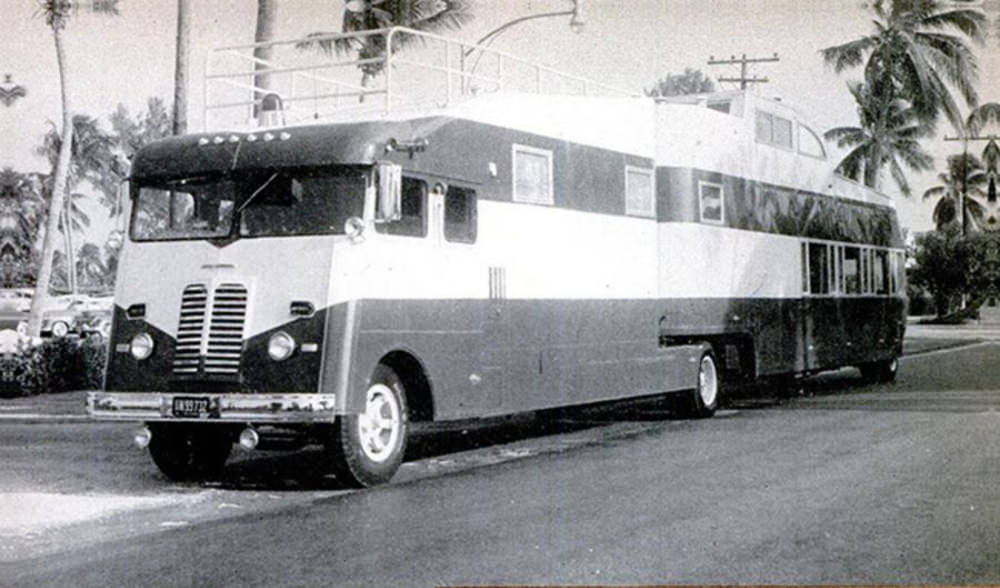
Long before “digital nomad” became a buzzword, mid-century inventiveness was already chasing the dream of a complete home and office on wheels. The 1952 Executive Flagship, pictured here, stretches out like a land yacht—part bus, part mobile headquarters—built to turn the open road into a self-contained lifestyle. Its streamlined front, expansive bodywork, and upper-deck railings hint at a vehicle designed not merely for transport, but for presence.
Details in the photo suggest a carefully planned rolling interior: multiple windows for light and ventilation, long side panels that read like compartments or rooms, and a roof area that resembles a terrace rather than a simple equipment rack. Parked beside palm-lined streets and utility poles, the coach looks both futuristic and oddly domestic, as if it could host a meeting, serve a meal, and offer a night’s rest without ever needing a hotel. That blend of comfort and capability is exactly what makes vintage vehicle inventions so fascinating—practical engineering wrapped in optimism.
For collectors and history lovers, the Executive Flagship stands as a reminder that the postwar era didn’t just modernize kitchens and offices; it tried to merge them into mobile form. This historical photo captures a moment when designers pushed the limits of coachbuilding to create executive motor coaches and luxury RV prototypes that promised independence, status, and convenience in one towering machine. Seen today, it reads like an ancestor of modern tour buses and high-end motorhomes, carrying the same ambition: to make travel feel like home, and work feel effortless, wherever the road leads.