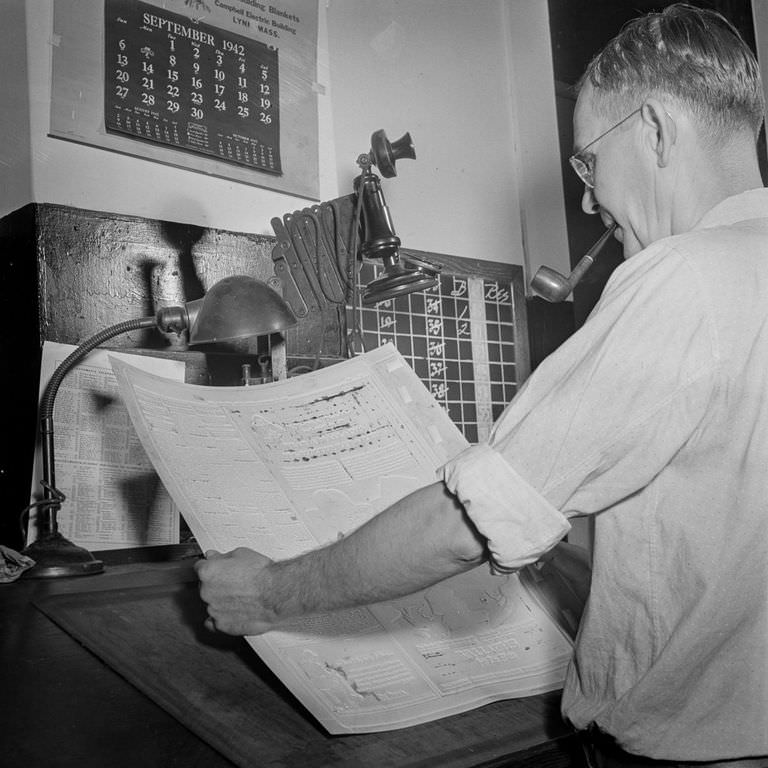
Under the wall calendar marked September 1942, a factory worker leans over a workbench, pipe in mouth, studying a mat laid out like a large sheet of patterned material. The surface is held at an angle to catch the light, making small imperfections easier to spot, while a desk lamp and clipped-on task light stand ready to flood the workspace with illumination. Behind him, a chalked grid board suggests production tracking and quality tallies, anchoring the scene in the everyday discipline of industrial inspection.
Quality control is the quiet backbone of manufacturing, and the title’s focus on “faults and blemishes” points to the meticulous standards expected of even humble products. The mat’s repeated shapes and textured areas hint at a process where uniformity matters—whether for fit, durability, or appearance—and where a single flaw could mean rework or rejection. In an era when factories relied on trained eyes as much as on machines, this kind of close checking turned craftsmanship into a system.
For readers interested in inventions and industrial history, the photograph offers a grounded look at how innovation actually reached the public: through careful, repetitive verification at the bench. Tools are minimal, but the method is clear—good lighting, steady hands, and practiced attention to detail. Search terms like wartime manufacturing, factory inspection, quality assurance, and industrial production fit naturally here, as the image underscores how standards and processes shaped the material world as much as new gadgets did.