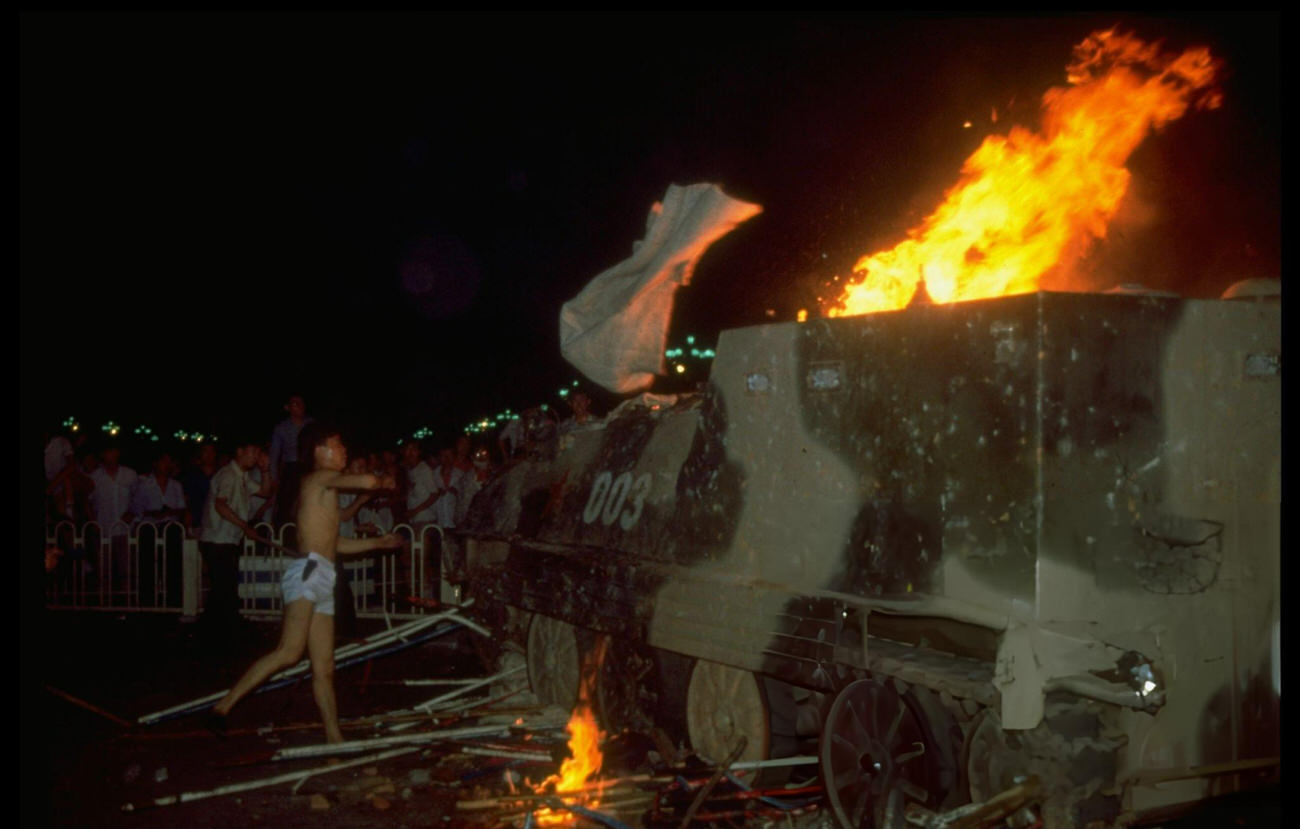
Night presses in as a tank burns, its turret crowned by a roar of orange flame that throws harsh light across dented armor and scattered debris. In the foreground, a man in shorts lunges forward and flings a white cloth toward the fire, the fabric caught midair like a flag in a sudden gust. Behind him, a crowd stands packed along low metal barriers, faces turned toward the blaze, their presence turning a single act into a public moment.
The scene carries the uneasy texture of civil wars: improvised, crowded, and perilously close. A vehicle built for battle sits disabled and blackened, marked with visible numbering on its side, while the street around it looks torn up by impact and haste—broken fencing, twisted rails, and small pockets of flame licking at the ground. The contrast is stark and unforgettable: bare legs and ordinary clothing against a machine of war, vulnerability set beside steel.
What makes this 1989 photograph linger is its ambiguity—whether the cloth is meant to smother flames, signal surrender, or claim a small measure of control amid chaos. The camera frames not only destruction but also the human instinct to intervene, even when the outcome is uncertain and the danger obvious. For readers searching for 1989 civil war imagery, burning tank photos, or street-level conflict documentation, this image offers a raw glimpse of how history looks when it is still hot to the touch.