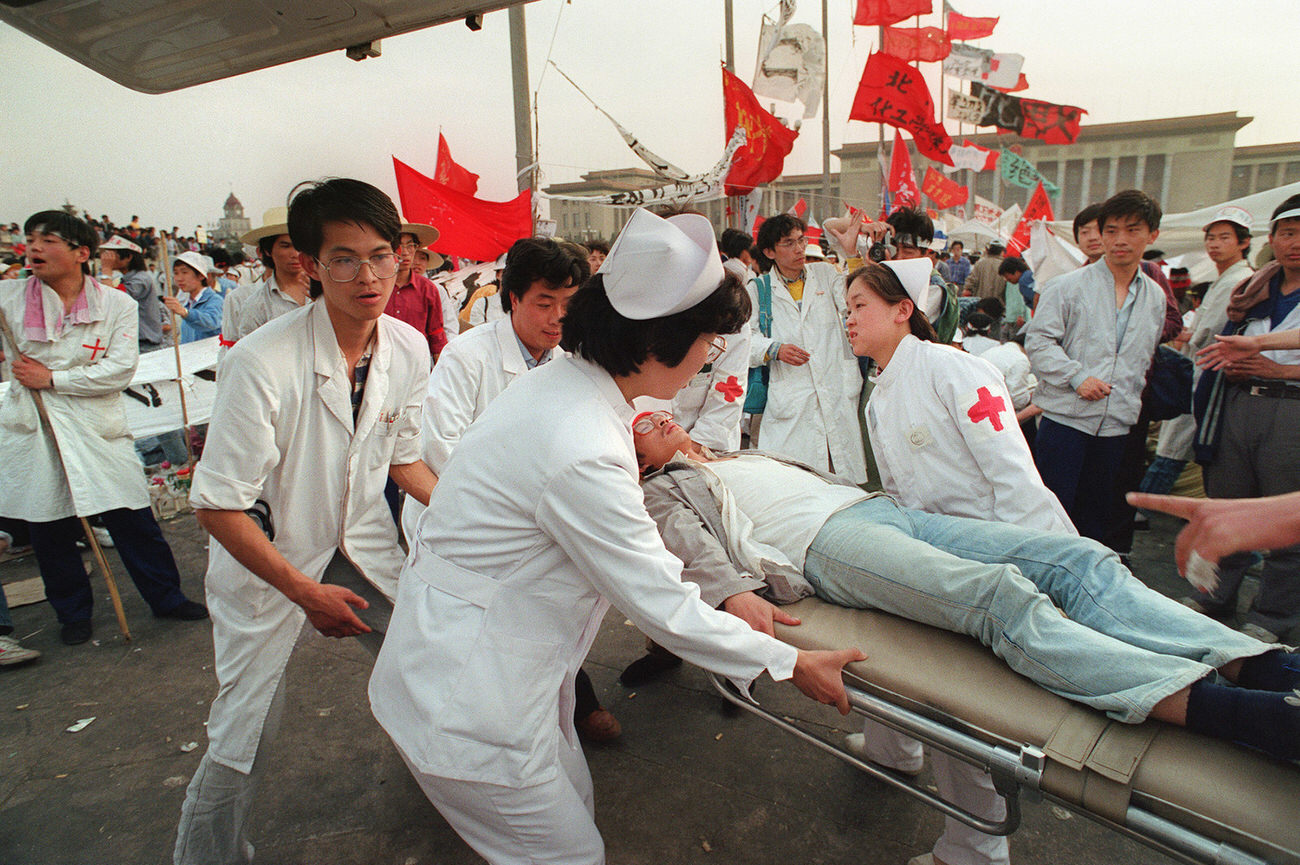
Urgency cuts through the crowded square as paramedics in white coats rush a stretcher forward, their faces set with concentration. The patient lies still, shoes off and legs extended, while a nurse leans in to steady the ride through the press of onlookers. Behind them, a sea of banners and red flags lifts above the crowd, turning the scene into a vivid intersection of protest and emergency care.
At Tiananmen Square, the title’s reference to Beijing University and the fifth day of hunger strikes frames what the camera reveals: endurance pushed to the edge. The medical team’s improvised corridor through students and supporters hints at how quickly ideals can become physical crisis, especially when bodies are used as instruments of political pressure. Even without audible chants, the gestures—raised arms, watching eyes, the tight formation around the stretcher—suggest a movement determined to hold its ground while trying to protect its own.
For readers exploring the history of student demonstrations and civil unrest in modern China, this photograph offers a stark, human-scale view of events often reduced to headlines. It’s a moment where caregiving and activism occupy the same breath, with triage unfolding under fluttering slogans and makeshift signs. The image invites a closer look at how protest camps functioned day to day—how solidarity was expressed not only in speech and song, but in the swift, careful work of carrying someone away from danger.