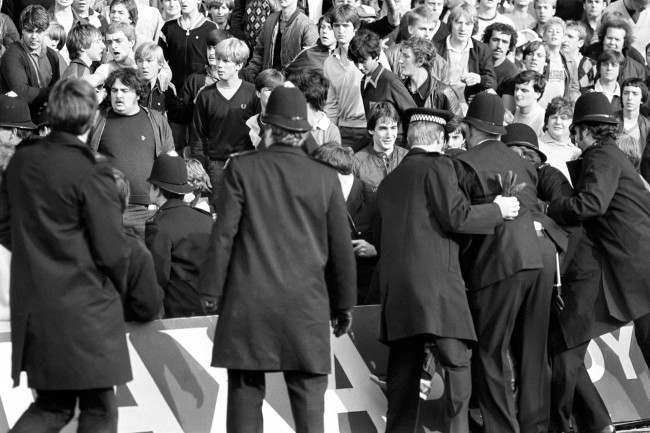
A tight knot of uniformed police in traditional helmets presses forward at the edge of the stands, their backs to the camera as they lean into a swelling crowd. Faces pack the terrace rows from barrier to skyline, with expressions ranging from curiosity to agitation, suggesting a moment when a sports afternoon tipped into something more volatile. The low advertising hoarding in front becomes a literal line in the sand, separating the authorities’ controlled formation from the restless spectators beyond.
Elsewhere in the frame, the crowd’s density tells its own story of 1980s matchday culture—close quarters, heavy coats, and a sea of onlookers craning for a better view. A few people appear to be pulled or guided away while others look on, caught between concern and excitement. The composition emphasizes movement and pressure: the police bracing, the onlookers leaning, and the barrier absorbing the force of bodies and emotion.
Moments like this help explain why discussions of football crowds, stadium safety, and public order loom large in the decade’s sporting memory. Without needing a specific venue or fixture, the photograph evokes the tension between celebration and confrontation that sometimes surrounded big games, especially when tempers flared. For readers interested in 1980s sports history, policing, and fan culture, it’s a stark reminder that the drama wasn’t always confined to the pitch.