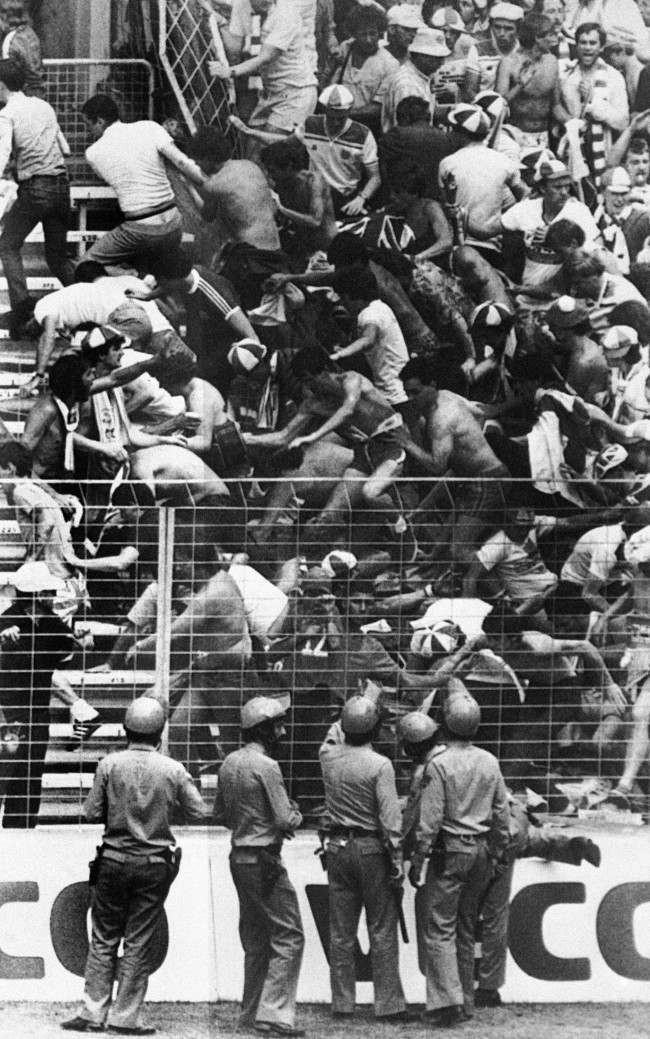
Chaos ripples through the stadium terraces as England football supporters spill over metal barriers, bodies compressed into a heaving mass of shirts, scarves, and raised arms. The frame is crowded and urgent, with fans climbing, stumbling, and trying to keep their footing while others brace themselves against the crush. Faces blur into movement, capturing the volatile edge where matchday emotion turns into disorder.
Along the pitchside, a line of Spanish riot police stands firm, helmets on and batons in hand, watching the turbulence from behind fencing and advertising boards. Their stillness contrasts sharply with the scramble above, emphasizing the separation between authority and crowd even when only a few metres apart. In the 1980s, European football often carried this undertone of tension, and images like this became shorthand for fears about terrace safety and fan violence.
Seen today, the photograph reads as both sports history and social history, a reminder of why stadium security, crowd management, and barrier design became defining issues of the era. The heavy fencing and packed steps evoke a time before modern all-seater grounds reshaped the matchgoing experience. For anyone researching 1980s football culture, England fans abroad, or Spanish policing at major fixtures, this stark moment offers a powerful starting point.