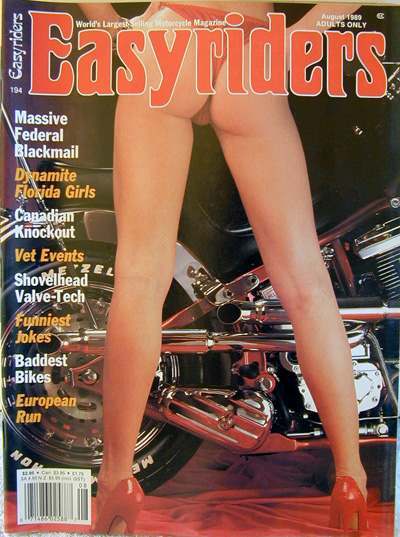
Bold red lettering and a wide-legged stance dominate this EasyRiders magazine cover, turning a simple posture into a graphic statement. The model’s legs form a strong “A” silhouette, centered like a frame around gleaming motorcycle chrome, while the surrounding cover lines crowd in with promises of “Massive Federal Blackmail,” “Dynamite Florida Girls,” and “Baddest Bikes.” Even without naming a place or moment beyond what’s printed, the design reads as a snapshot of tabloid energy, biker culture, and the era’s unapologetic attention-grabbing aesthetics.
What makes the A-frame pose so enduring is how efficiently it creates focus and power: it opens space, suggests confidence, and directs the viewer’s eye exactly where the layout wants it to go. Here, the stance functions like a visual doorway, pulling attention through the body’s geometry to the machine beneath, linking sex appeal and mechanical spectacle into one layered symbol. For modern fashion photography, album art, and movie posters, the same device still works—an instantly legible shape that communicates dominance, attitude, and a charged kind of presence.
Alongside its visual punch, the cover is a compact lesson in editorial composition and cultural messaging. High heels on a glossy surface, polished metal and tire lettering, and oversized typography all compete—and cooperate—to sell an identity as much as a magazine issue. Readers interested in the history of iconic poses, poster design, and the lasting influence of magazine cover art will recognize how this A-frame arrangement continues to echo through contemporary styling, advertising, and cinematic one-sheets.