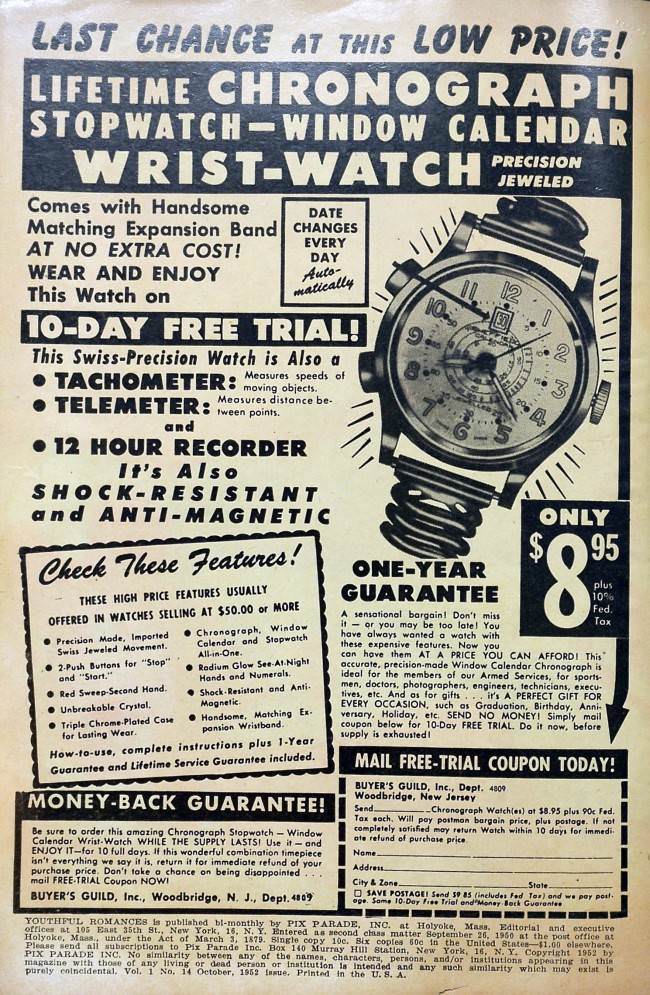
A breathless sales pitch jumps off the page here, promising a “Lifetime Chronograph Stopwatch–Window Calendar Wrist-Watch” with all the trimmings and, most importantly, a bold “10-day free trial.” The ad piles on urgency—“Last chance at this low price!”—and keeps the reader’s eye moving between the oversized watch illustration, dense feature lists, and the tempting price tag. Even without a stated date in the post title, the design and language feel like a classic mid-century mail-order advertisement aimed at bargain hunters and gadget lovers.
The humor in the title lands because the fine print practically invites it: timekeeping becomes a marketing game, with guarantees, trial periods, and technical-sounding extras meant to inspire trust. Words like “Swiss-Precision,” “shock-resistant,” and “anti-magnetic” evoke an era when modern life seemed measurable and improvable, one dial at a time. The copy also flatters the buyer’s ambitions, suggesting this single wristwatch could serve motorists, engineers, photographers, and executives alike.
For anyone interested in vintage watch ads, consumer culture, or the history of mail-order retail, this piece is a compact lesson in persuasion. It mixes confidence and caution—money-back promises alongside a mail-in coupon—while turning a simple purchase into a low-risk “test drive.” Read closely and you can see how a 10-day free trial becomes a punchline waiting to happen, especially when the watch itself might be the only witness.