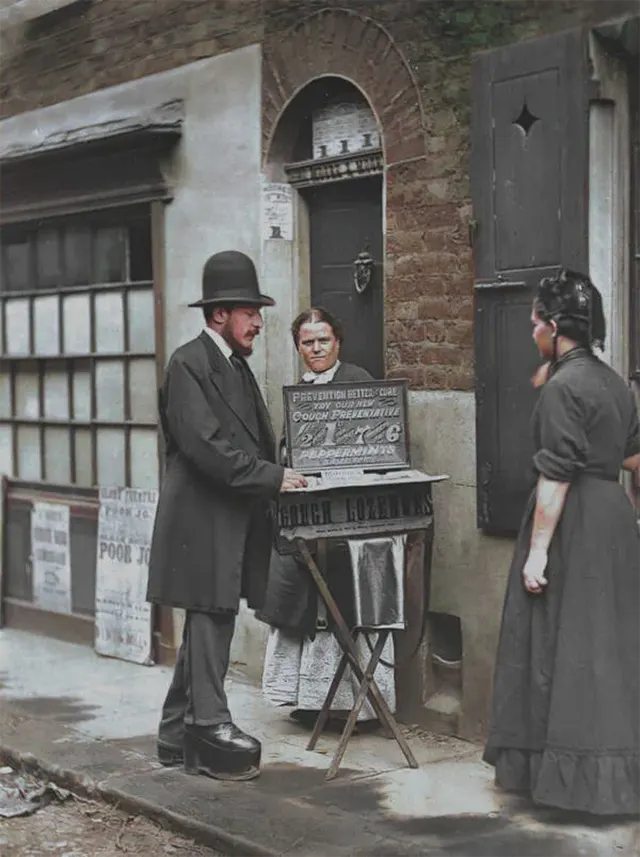
Under a brick archway and beside shuttered windows, a self-styled street doctor turns a narrow patch of pavement into a storefront. A small folding stand supports a bold sign advertising “cough drops,” while the vendor—aproned and watchful—holds the center of the scene like a stage performer between doorways. The colorization brings out the everyday textures: worn stone at the curb, dark wool coats, and the muted tones of old masonry that frame this quick transaction.
A neatly dressed passerby in a bowler hat pauses at the counter, reading the claims and prices with the cautious curiosity that patent medicines often inspired. Across from them, a woman stops to listen, suggesting the familiar sidewalk audience that gathered around miracle cures, tonics, and “new” remedies in the late 19th century. Posters on the wall hint at a crowded marketplace of competing notices, where health advice, entertainment, and salesmanship could overlap in a single glance.
Set in the 1890s as the title notes, the moment speaks to an era when coughs and colds were more than minor inconveniences and over-the-counter relief was frequently sold person-to-person. Street medicine vendors relied on strong branding, confident language, and a portable setup—part shop, part lecture—to win trust in a busy urban street. For readers searching for a window into Victorian street life, early advertising, and the rise of cough drops and patent remedies, this image offers an unusually intimate vignette of commerce at the curb.